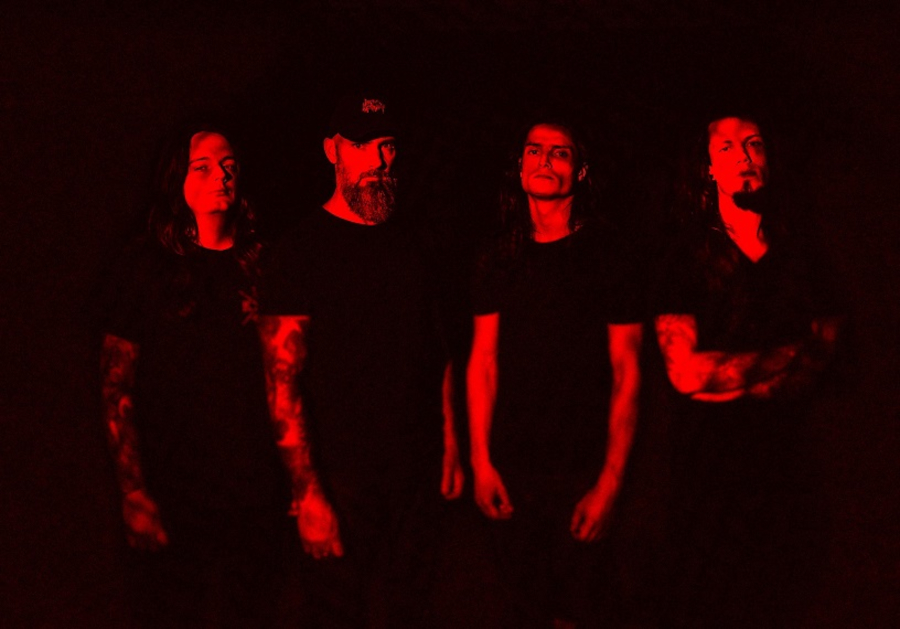
 The debut album “To Each Their Hell” by the Dutch band THE CURSE MADE FLESH caught my attention so much that I decided to get in touch with one of its main creative forces, bassist Joost van der Graaf. He is certainly no newcomer to the metal scene. His name is associated with several notable bands, including PESTILENCE, DEW-SCENTED and ICHAOS, and he has decades of experience exploring various forms of extreme metal behind him. Nevertheless, he is now embarking on a new creative journey which, as he puts it, offers him above all freedom and space to bring his own ideas to life.
After years of playing in several established bands, you decided to open a new chapter and form THE CURSE MADE FLESH. When did the idea of starting your own project first begin to take shape? Was it the result of a gradual development, or was there a specific moment when you realised that you wanted to create something completely new?
Sometime in the summer of 2023, I decided to start a new band. I’d been carrying around some musical and lyrical ideas for quite some time, ideas that had never found their way into any of my previous projects or bands, and I also had some new ones. It wasn’t an easy decision because I knew how much work it would involve, with no guarantees that it would actually take off.
But then I realised how much I enjoy the underground scene: those small venues and shitty food, the hours spent on the road, the extreme and demanding music, but above all, the awesome people who are part of this scene. It feels like home to me.
How long did the idea of forming THE CURSE MADE FLESH take to mature before it became a reality? Did you already have a clear vision of the band’s musical direction from the beginning, or did it start to develop during the actual songwriting process?
Yeah, so a lot happened in the three years after I decided to go for it. I did have a pretty clear vision of what I wanted this to be, but as it started to take shape, some things turned out differently. This is actually one of the things I love about the process: by not clinging to the initial ideas and using them only as a guideline, things can take on a life of their own and become even cooler than what you originally had in mind. Of course, that doesn’t always happen, and if something doesn’t work, you just go back and start over.
I like the process to be organic, with twists and surprises along the way. Working with Javier, who has his own ideas about guitar parts, made everything so much better. One thing I was certain about from the beginning was the sound and the energy. I wanted to work with a single guitar, bass, drums without triggers, and a versatile, brutal voice, without putting too much emphasis on speed. Thanks to the amazing people who worked on this with me, especially Erwin Hermsen from Toneshed Music Production, the final result in terms of sound actually exceeds my expectations!
How did you meet the other members of the band? Did you choose the musicians based on a specific vision of the band’s sound, or were personal chemistry and a shared musical vision more important?
Personal chemistry is always crucial, in my opinion. Without it, or at least some basic mutual respect, the many hours spent on the road or in the studio feel like torture rather than fun. I met Javier when I was working at Ibanez here in the Netherlands and he started working there as well. He had just moved here to study at the Amsterdam Conservatory. I saw him perform that same week and instantly knew he would be the right man for this. Luckily for me, he was looking for musical opportunities at the time and was eager to give it a go.
In the beginning, we tried different approaches, including having me do the vocals myself, as I had done on Creepmime’s 1995 album “Chiaroscuro”. But I soon let go of that idea so I could fully focus on songwriting and bass. We recorded demos while looking for a drummer, and it was Erwin Hermsen who suggested checking out Fons, who was working at his studio as an engineer and drum tech. Fons was up for it, so we got together to rehearse three demoed instrumental tracks, which he absolutely nailed. He and I instantly clicked in a way that felt right.
From there, I kept writing, and soon Javier started coming up with his own guitar parts based on my initial ideas, bringing a more progressive vibe to the music. We worked with two different singers before eventually settling on Morrison. One of them was my friend Robbe K., who did an amazing job but was simply too busy with Disavowed and other great projects at the time. Fons suggested Morrison, he was up for it, and when we got together to rehearse, he instantly blew us away with his insane voice. We all knew we had something good going, so we moved forward from there.
You have a long career behind you and experience with several important names in the death metal scene. What still motivates you to create new music after all these years? Is it primarily the need for self-expression, the desire to push your own boundaries, or simply the fact that you cannot imagine your life without writing music?
Mainly, it’s just the joy of creating stuff. First, you have an idea, you stick with it, work hard, and suddenly there’s brand-new music to be enjoyed by yourself and others. But it’s also about the process and enjoying every step along the way. Meeting new people as well as old friends and simply having a good time. I guess my motivation has changed somewhat over the past few decades. When I was younger, I had the urge to prove things to others and legitimise my existence through music. In that sense, I’m actually glad I’m older, haha!
But yes, as you say, I cannot imagine my life without it. Music has always been there throughout the past 35 years. Whether I was working shitty jobs on the side, watching the world change or starting a family of my own, it’s always been a constant. It’s just what I do.
The debut album “To Each Their Hell” represents the first complete statement from THE CURSE MADE FLESH. What did working on this record mean to you, and how would you describe the main idea that connects the entire album? Does the title also reflect a personal experience or your view of human existence?
Musically, this is simply how I like my extreme music: punishing and demanding, but with every instrument clearly audible and telling its own story. Conceptually, it’s pretty personal, I guess. The lyrics came about rather spontaneously and reflect some strong personal beliefs. To me, humanity as a whole is an insignificant speck in space and time, an accidental “hiccup” of the universe that is ultimately irrelevant to it. While we create worlds of our own through our societies, religions, fears and convictions, we are all equally subject to the forces of nature. There will be a world without us and without anyone left to remember anything. An indifferent planet in an indifferent universe.
This is a beautiful and comforting idea to me. During my time here, I can simply create whatever I want. I can fail or succeed, give up or start over again, enjoy a healthy life or drink myself to death, enjoy my family or end up alone and miserable. Either way, sooner or later, I’ll return to the soil as if nothing ever happened.
Musically, THE CURSE MADE FLESH explore a more progressive and psychedelic approach to death metal. What led you in this particular direction? Was it a conscious decision to move away from some traditional death metal conventions, or did this sound develop naturally during the songwriting process?
I’ve always enjoyed psychedelic music across different genres, so yes, this happened rather naturally. I happen to love old-school death metal, but it’s interesting to think that many of the bands we call “traditional” today were once groundbreaking new acts! Think about it.
What caught my attention about the album is the combination of technically sophisticated guitar passages, distinctive rhythmic changes and psychedelic moments. Although the songs are quite complex, they never lose their atmosphere or sense of urgency. How do you find the balance between technical complexity and the emotional impact of the music? Is musical precision more important to you, or the overall atmosphere of a song?
The overall atmosphere of a song is always the most important thing to me. It’s funny that this is often described as “technical” when I never intended to make a technical death metal album. Honestly, when I started working on this, I was listening to all kinds of black metal and was pretty much inspired by that!
Once you start working on something, it just unfolds the way it does, and apparently, that turns out to be rather technical. But technique itself isn’t music. It’s only a tool or an ingredient, if you like. All of us have put serious time into exploring the possibilities of our instruments, and it’s an ongoing process. But I rarely think about these things when I’m writing music.
Some passages on the album have an almost hypnotic, occasionally unsettling quality. When composing, do you also work with particular images, moods or ideas that you want to evoke in the listener? How important is atmosphere to you compared to the aggression traditionally associated with death metal?
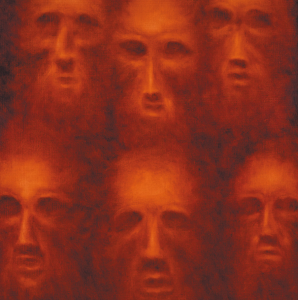
Atmosphere is just as important as aggression. Sometimes it simply emerged on its own, while at other times I was thinking about the lyrics and the concept. But I know I had the artwork in mind throughout the entire process.
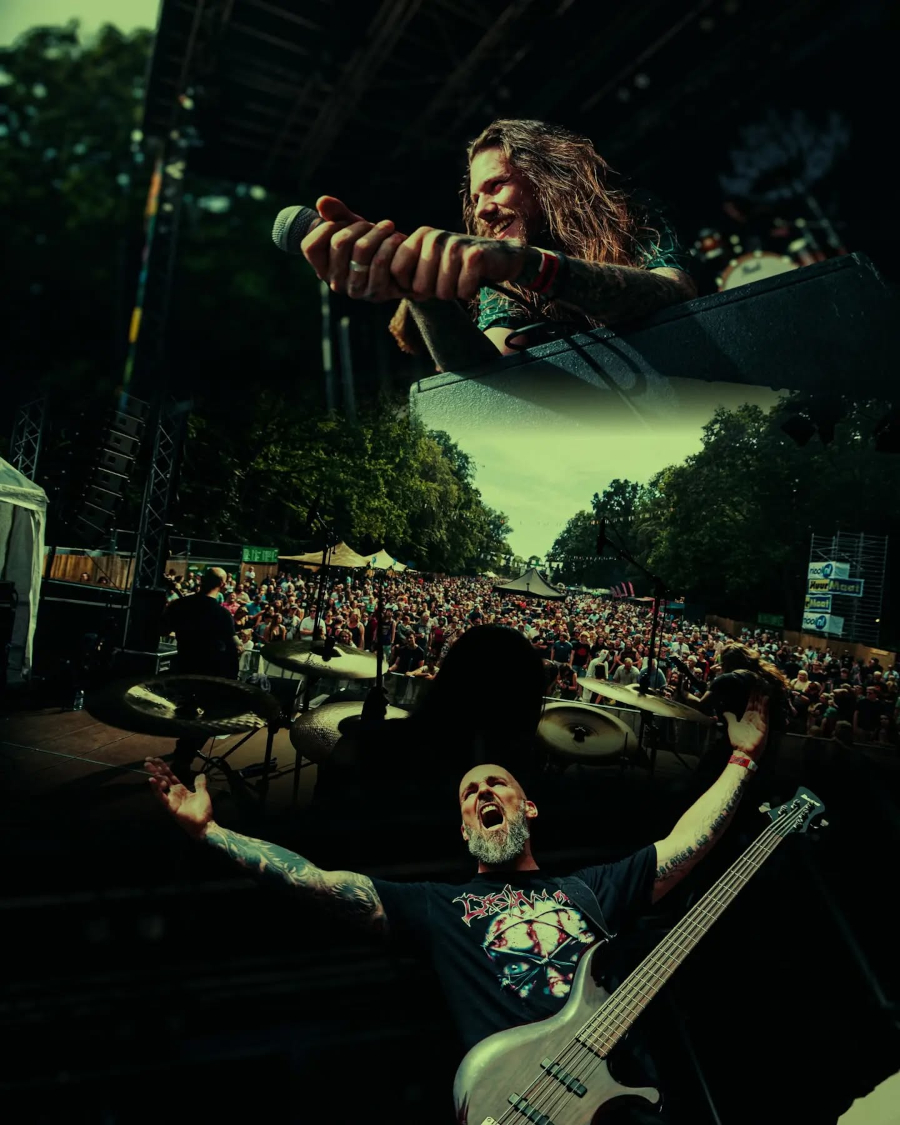
How did the actual songwriting process for the debut album work? Did you prepare most of the musical foundations yourself, or was it a collective effort involving the entire lineup from the beginning? To what extent did the other members contribute to the album’s final sound?
I wrote all the music myself, but Javier took my guitar parts as a starting point for most of the songs and made them better than I could ever have done on my own. In that sense, he absolutely contributed to the final result. For instance, it was also his idea to leave out the guitars in that particular section of “Laughter”, turning it into a bass solo.
Fons came up with the idea of repeating the blast-beat ending of “Fever Dreams And False Awakenings”, which worked out really well. In general, whenever Morrison, Fons or Javier make slight changes to their parts to make them more their own, it always makes the music better. These guys know exactly what they’re doing.
So even though the idea for the musical direction and the core compositions came from me, it ultimately became a joint effort, and I’m very happy it did!
The title “To Each Their Hell” leaves room for various interpretations. What themes do you explore in the lyrics? Are you more interested in individual inner conflicts, social issues, or the darker aspects of human nature?
The title literally comes from the Buddhist expression “To Each Their Own”, which implies respect for everyone’s individual path in life and so on. I changed it into this album title with the idea that every individual struggles with their own personal demons and fears, but that all of this is also irrelevant in the grand scheme of things, which makes it almost ironic. I think the essence of this idea is captured quite nicely in the title track.
Looking back at the history of death metal, which period do you consider the most important or interesting? Was it the groundbreaking era of the late eighties and early nineties, when the foundations of the genre were established, or one of the later periods when death metal began to branch out into different musical directions?
Many periods are interesting to me, but for different reasons. I love the early technical stuff, which was just so well done… These days, there’s obviously so much going on that it’s insane! I enjoy discovering bands through friends. My buddy Marvin from SEVERE TORTURE often sends me stuff he thinks I’ll like, and he’s always right! How about CONCRETE WINDS?! I think what I appreciate most in music is when it “forces” me to pay attention, if that makes sense. My first real metal album was METALLICA’s “…And Justice for All”, with its horrific production. At first, I thought I hated it, but I just kept playing it until I was sure I loved it. When it comes to actual death metal, it all started for me around 1991 with DEATH, CYNIC and PESTILENCE, but also MORBID ANGEL and early SINISTER. So I guess the early nineties were the most important era for me personally because that’s where it all started.
 How do you perceive today’s death metal scene compared to the time when you first started out? Do you think modern bands have more opportunities to experiment and develop their own identities, or is the genre becoming increasingly confined to established formulas in certain respects?
That’s an interesting question. When I started out, people were sending each other tapes and photocopied underground zines. Once you had something, whatever it was, you had gone through some trouble to get it, so you would take the time to listen and read carefully, making sure you didn’t miss anything… Now, the whole world and pretty much everything that has ever been created is literally at your fingertips. The value of things is just different. I’m not saying everything was better in the past, but I do sometimes regret how things seem to have become a commodity, whereas 30 years ago they were more like a way of life.
One upside of today’s reality is the incredible technology, which enables people to create things quickly and efficiently. I think it’s obvious that the endless technological possibilities have changed music in general.There’s no way around technology, and it changes people. I know it has changed me. But it’s a comforting thought that, in the end, regardless of all that, people still want to get together and enjoy music being played live by real people. I try to focus on that. There are so many young people doing amazing things, and the level of musicianship is sometimes just crazy. I enjoy it very much.
Death metal has undergone considerable development over the decades. Alongside traditional death metal, we now have technical, progressive, melodic and experimental approaches. Which of these directions appeals to you most at the moment, and where do you think the genre might go in the future?
I think it’s impossible to keep up with all the developments, styles and new bands. There’s just too much going on. In the end, it’s all just music, and when I come across something I appreciate, like Blood Incantation or Imperial Triumphant, I’ll tell my friends about it and try to catch them live.
There seems to be a shift in music education, since there’s no denying that metal has become a serious industry. Metal Factory, where I teach, is of course based on this idea, and it’s actually unique in that respect. But even traditional conservatories around here seem to be gradually embracing the genre and recognising all the great musicians involved. It was about time, but it’s a good thing. As for where it might all go in the future… Let’s see!
How do you perceive the younger generation’s interest in death metal? Do you notice younger fans attending concerts? Do you think the genre is successfully attracting a new audience, or does it remain primarily the domain of the generation that grew up with it in the nineties?
I see a lot of really young metal enthusiasts attending shows and playing instruments. It’s super cool. Of course, you also have older people who stick to the old styles and dismiss any form of change, but despite my age, I can tell you that’s not me!
What do you think determines whether a death metal band can maintain its identity over several decades? Is it the ability to come up with new ideas, remaining faithful to its original musical style, or simply being authentic?
I think there are many different approaches, and it really varies from band to band. Authenticity is something you can simply feel, and there’s no formula for it. Take VADER, for instance (I’m a huge fan). They’ve never really changed their take on death metal, but there are still different shades throughout their discography, and they always deliver quality. Other bands change their course throughout their careers because it simply makes sense to them, which can work just as well.
I believe that as long as you do what you think you should, everything is fine. But… if you start worrying about what’s hip and happening and try to adapt to a target audience, things often go sideways.
Starting a new band today certainly isn’t easy. Competition is fierce, the music market is saturated, and attracting listeners’ attention requires much more than simply releasing a good album. How challenging is it to build the identity and reputation of THE CURSE MADE FLESH, get the band’s name out there and establish yourselves on the international scene? Do you see any advantages in this respect thanks to your previous musical experience and contacts?
Despite my experience and contacts in the scene, there’s absolutely no guarantee that things will work out. I have to start from square one, just like anyone else, and having a somewhat established reputation as a working musician can even work against me sometimes, as expectations tend to be higher.
But square one is a beautiful place where anything is possible and you can move freely. Yes, the competition is fierce, but the scene is just awesome, and there’s a lot of genuine mutual support within the underground. In the end, I believe we all need each other to keep things going. My goal with TCMF is pretty simple: To create, record and perform music that we enjoy ourselves and have a good time doing it. We’re not in a rush, and we appreciate everything that comes our way, like this very first interview following the release of TETH!
 The Netherlands has a long and particularly strong death metal tradition, associated with bands such as PESTILENCE, ASPHYX and SINISTER. What is it like to be an active musician on the Dutch metal scene today? Does death metal still have a strong foundation there, with enough clubs, live opportunities and fan support, or is it becoming increasingly difficult even for experienced musicians to keep a band active?
There are some nice things going on, but there’s also room for improvement. Somehow, Dutch bands, both old and new, often seem to do better outside the Netherlands. I hope to witness more appreciation for Dutch acts, as there really is so much quality out there.
It’s not necessarily difficult to keep a band active, but it does require a strong will and a creative approach, with people organising cool little festivals themselves and things like that. There are some nice venues, yes, but money and regulations sometimes get in the way. Back in the day, you just made things happen together, whereas now you need security, people to clean up afterwards, and everyone has to get paid… I’m positive, though, because a lot of young people in the scene are willing to put in the work and support each other.
THE CURSE MADE FLESH may be a new band, but its members are certainly no newcomers to the music scene. What are your plans for the band? Are you already thinking about new material, or do you want to focus primarily on bringing the debut album to the stage?
We have some nice local shows coming up, and we’re looking forward to playing them. We’re starting here at the beginning and trying to pursue quality at all times. I’ve been working on new material for over a year now, and I cannot wait to bring it to life. We hope to get some more shows with this album and perhaps wake up a few bookers to make that easier.
Looking back at your musical journey so far, what does THE CURSE MADE FLESH allow you to do that you perhaps couldn’t fully realise in your previous bands? Does this project represent the greatest creative freedom you have experienced in your career so far?
I think it does, yes. I literally just throw in whatever comes to mind, and then we fine-tune it together. During rehearsals, we might change certain things to make them work better. Overall, it just feels natural and right. In previous bands, I was the bass player and could come up with my own bass lines, as I did with PESTILENCE, or even write entire tracks, as I did with DEW-SCENTED and ICHAOS. That was awesome, of course, and I learned a lot from those experiences.
This project, though, is like a playground where we can move freely and create without the boundaries of a particular style or the expectations of an audience. I’ll do everything I can to keep it that way.
Thank you for your time and for answering my questions. I wish you and THE CURSE MADE FLESH all the best!
Thank you, man! It was my pleasure! I hope we visit your beautiful country in the near future.
ALL
https://thecursemadeflesh.bandcamp.com/album/to-each-their-hell