 Despite the country’s small size, Icelandic black metal has an exceptionally strong and distinctive sound. In recent years, the scene has become one of the most interesting branches of European black metal, with names such as SVARTIDAUÐI, MISÞYRMING, DYNFARI, and ALMYRKVI earning respect far beyond the borders of this small island.
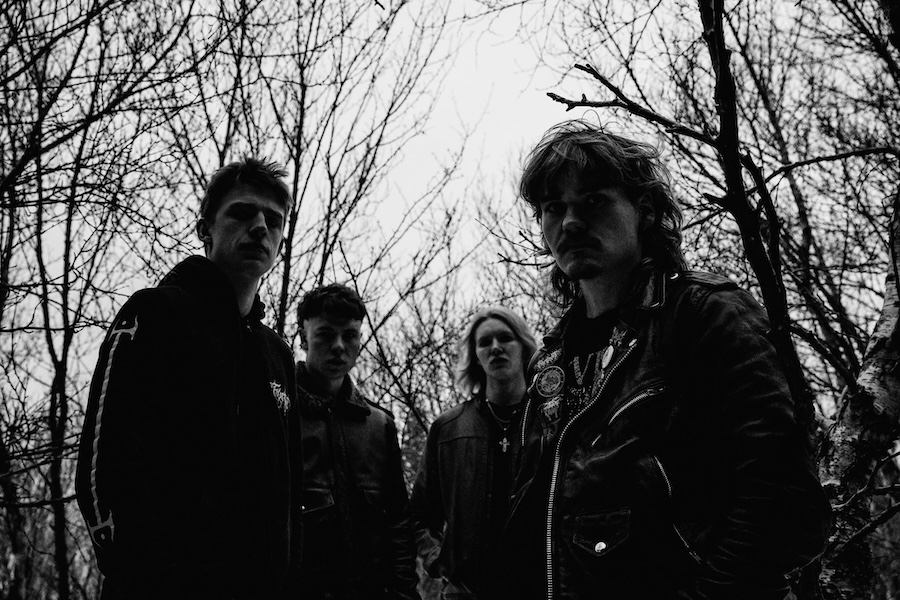
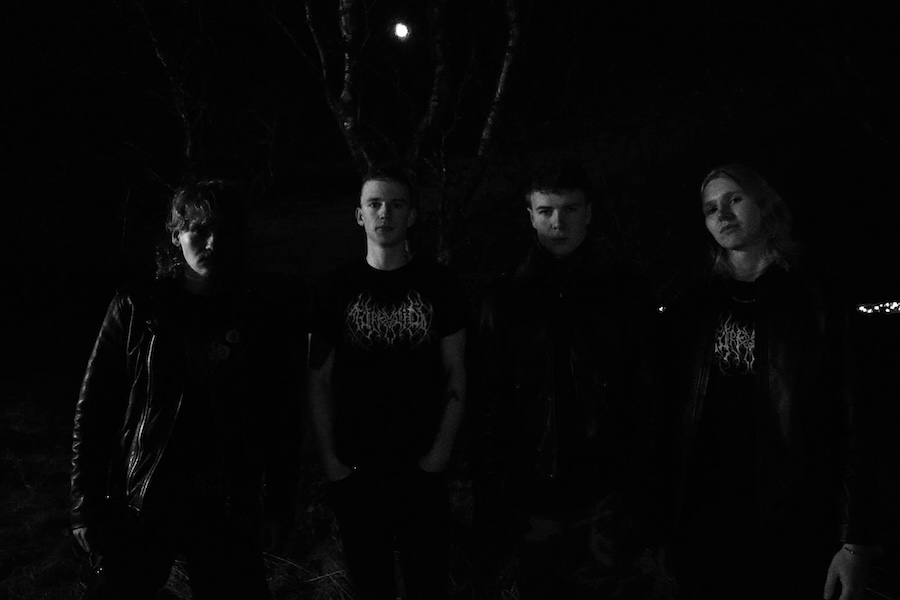
A young band called MYRKVIÐI is now becoming part of this tradition. Formed as recently as 2025, the band initially started out as a solo project, but within a few months it evolved into a full-fledged lineup. In June 2026, MYRKVIÐI released their debut EP, “Harmur”, a four-track recording that combines the aggression and intensity of black metal with a stronger melodic sensibility. Their lyrics, meanwhile, remain firmly rooted in Icelandic, which for the band is not only their natural language but also an important part of their identity.
I spoke with vocalist and guitarist Eimar Steinarsson about everything the young band has managed to accomplish in such a short time.
MYRKVIÐI are a very young band – you only formed in 2025. How did you guys come together, and what was the initial impulse to start MYRKVIÐI?
Well, MYRKVIÐI was initially supposed to be a solo project. I had been writing demos for about a year and was planning on recording and releasing them as a one-man band. But in early 2025, I met up with Pétur, the band’s lead guitarist, and we started jamming together. He had already been playing with our bass player, and at that point, it just seemed like such a waste to make it a solo album. So we decided to form MYRKVIÐI.
What were those very first days like? Did you already have a clear idea of what you wanted the band to sound like, or did your style develop naturally through rehearsing and writing songs?
Like I said, we—or at least I—already had a pretty good idea of what we wanted the band to sound like, since we had a few songs ready before the band was even formed. Pétur and Jón, however, brought their own style into the mix, and together we fine-tuned the songs. The only real problem in the early days of the band was that we didn’t have a drummer. I played drums during the first few rehearsals, but once Andri joined the band, he really took us to the next level.
What does black metal mean to you personally? What is it about the genre that made you want to create your own music within it?
You know, I’m not really sure. Black metal is just such satisfying music to play. It’s always fascinated me, and I’ve always found it more interesting than, say, death metal. There’s somehow more variety within black metal, and I feel like, as an artist, you have a bit more freedom to create and express yourself within the genre.
In June 2026, you released your debut EP, “Harmur”. How long had the songs been developing, and do you see the EP as the true beginning of MYRKVIÐI, or rather as the first document of a band that had already spent some time finding its sound?
The songs on Harmur had been in the works for quite some time. But I still see this album as the beginning of the band. Since we’re such a new band, we’re still experimenting with new things and figuring out how to refine and develop our own style.
Why did you choose to release a four-track EP first? Was it important for you to introduce the band through a shorter, focused release before moving on to a full-length album?
The reason we decided to release an EP instead of an LP was really just because we wanted to get something out there as soon as possible. Iceland is such a small country with so many artists that it’s much harder to gain attention through word of mouth alone, especially when it comes to reaching people abroad. We also wanted to save the full-length album for later. We want to take our time with it, write the best songs we possibly can, and record it to the best of our ability.
The title “Harmur” can be translated roughly as “grief” or “sorrow”. What does the title mean to you, and is there a common theme or story connecting the four songs?
“Harmur” is simply the title of the last song on the record. That song is about a murder committed in the heat of passion. There isn’t really an overarching story or concept tying the whole record together, as each song deals with something different. We just thought Harmur sounded good as the title of the record.
You sing in Icelandic. Is using your native language an essential part of Myrkviði’s identity, or did you ever consider writing lyrics in English as well?
Writing the lyrics in English was never really an option for me. I think it’s very important to sing in Icelandic because it’s my native language, and I also find it much easier to write lyrics in Icelandic than in any other language. I live in Iceland and speak Icelandic, so writing the lyrics in English just wouldn’t have felt right to me.
Your music is melodic but also very aggressive. A review of your Músíktilraunir performance mentioned both epic passages and influences from the golden era of Norwegian black metal. Which bands or records have influenced you the most – and is there anything you deliberately try to avoid sounding like?
I’d say Icelandic black metal bands have had the biggest influence on my music. Bands like SVARTIDAUÐI, MISÞYRMING, and NAÐRA have definitely been major influences. Of course, the Norwegian bands have had a huge impact as well. That being said, I try not to sound too much like basic Norwegian black metal, because I feel like that style has become a little tired nowadays. It’s obviously legendary music, but that era has passed, and I think it’s a bit cheesy to try to imitate those ’90s bands today.
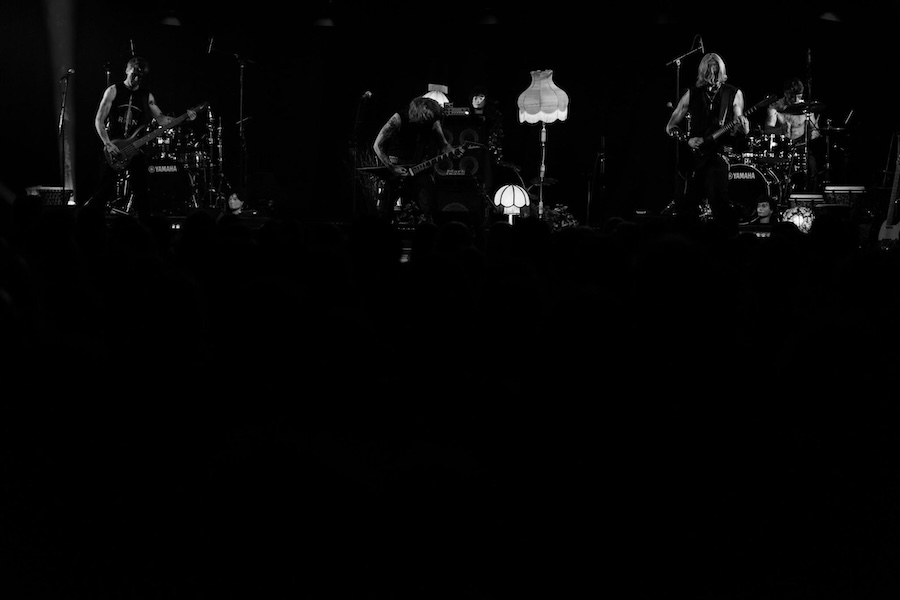
This year you reached the final of Músíktilraunir, among eleven finalists. What was it like to perform in a competition that brings together such a wide variety of musical styles?
It was great to play alongside such a diverse group of artists, but it was also a little strange. We were without a doubt the most intense band in the competition that year, and you could definitely tell that what we were doing wasn’t exactly what everyone in the audience wanted to hear. It was really funny looking out into the crowd and seeing how differently people were reacting. Some people were completely into it, while others were sitting there with their arms crossed and looking pretty miserable. There were also quite a few people covering their ears, and some even got up while we were playing and moved to the back of the venue.
 Andri won the award for Best Drummer, while MYRKVIÐI also received recognition for Icelandic songwriting. How did you experience those results? Did the competition change the way you see the band or influence what you want to do next?
It was really great to win those awards. We always had a feeling that Andri would win the award for Best Drummer because he’s an insanely good drummer. It was a bit more surprising that we won the award for Best Lyrics, though. I’d never really thought of my lyrics as anything particularly special before, but apparently the judges really liked them. It was also pretty funny that we won the Best Lyrics Award considering we were the only band where nobody could understand a word I was singing.
Has taking part in Músíktilraunir helped you become more visible within the Icelandic music scene? Have you noticed any difference in the opportunities or attention you’ve received since the competition?
Yeah, you naturally get more attention after playing at Músíktilraunir since it’s broadcast on television, so a lot of people get the chance to see you. I’ve definitely noticed that since Músíktilraunir, more people have started following us and coming to our shows, which is great.
Iceland has a remarkably strong black metal scene considering the size of the country. How do you see that scene as a young band just entering it?
I definitely see it as a positive. It’s a very strong scene, but since Iceland is such a small country, everyone in the scene pretty much knows each other. That makes it a really good environment to be in as a new band.
Do you feel connected to the tradition established by bands such as DYNFARI, SVARTIDAUÐI, or ALMYRKVI? Or are you more interested in creating something that is distinctly your own?
Yeah, of course we connect strongly with the older Icelandic black metal bands and draw a lot of inspiration from them. At the same time, though, we try to take our music in a slightly more melodic direction while still maintaining the intensity and power that Icelandic black metal is known for.
Do you think there is such a thing as specifically “Icelandic” black metal? If so, what do you think creates that particular sound or atmosphere?
Yeah, I think Icelandic black metal in general tends to be a bit heavier and more intense than other styles of black metal. It somehow has a “bigger” sound to it—more epic, in a way. But I’m honestly not entirely sure what it is that makes Icelandic black metal so unique.
The Icelandic scene is small, with many musicians based around Reykjavík. Is that mainly an advantage – because everyone knows each other and can support one another – or can the small size also be limiting?
I don’t think there’s anything negative about it at all. It’s great to have such a tight-knit scene where everyone knows each other. It makes it much easier for smaller Icelandic bands to connect with the bigger, more established bands in the scene.
When I listen to Icelandic black metal, I often feel that I can hear the landscape in it – isolation, darkness, wind, volcanic nature, a certain sense of remoteness. Do you think the environment you live in genuinely influences your music, or is that more of a romantic idea people from abroad project onto Iceland?
I can’t really speak for Icelandic black metal in general, but when it comes to my own music, I’d say no. I don’t think the Icelandic landscape or environment has had much of an influence on my music.
Iceland has become a huge tourist destination, and the country is changing quite rapidly as a result. How do you experience the tourism boom as people who actually live there? Is there anything about it that annoys you, or do you mostly see the positive side?
Yeah, I don’t really see anything wrong with tourists in Iceland. They generally don’t cause any trouble and are respectful towards us, so I can’t really complain.
Do you think there is a difference between the Iceland that tourists experience—volcanoes, waterfalls, northern lights, and this almost “magical” landscape—and the Iceland of everyday life? And does that difference have any influence on the music you make?
Yeah, definitely. I think the Iceland that tourists experience can be very different from everyday life here. Tourists mostly see the volcanoes, waterfalls, northern lights, and all of this dramatic nature, while for us it’s just the place where we live. You don’t really walk around thinking about how magical or exotic everything is when it’s part of your everyday surroundings. As for the music, though, I don’t think that difference has much influence on what I write. Like I said before, I’ve never really felt that the Icelandic landscape has had a major impact on my music.
What is the most important thing for MYRKVIÐI right now? Writing new material, playing live, recording another release, or something completely different?
The most important thing for MYRKVIÐI right now is simply to keep playing shows and writing new music. We want to make a name for ourselves and write enough material for our future releases.
Do you already have an idea where you want to take the music after “Harmur”? Will the next release continue in the same direction, or are you interested in experimenting and taking the sound somewhere new?
Yeah, we’ve already started working on new material for the next record. We want to stick with the same overall sound, but refine it and really perfect it.
What are your ambitions? Do you mainly want to establish MYRKVIÐI within the Icelandic scene, or are you already thinking about playing abroad, touring Europe, and reaching an international audience?
Right now, we’re mainly focused on playing shows here in Iceland and making a name for ourselves. Hopefully, we’ll get the chance to play abroad soon, but for now, the plan is to conquer Iceland first.
And finally: imagine MYRKVIÐI five years from now. Where would you like the band to be, and what would you like to have achieved?
Hopefully, we’ll have released a full-length album by then and become better known outside of Iceland.
ALL