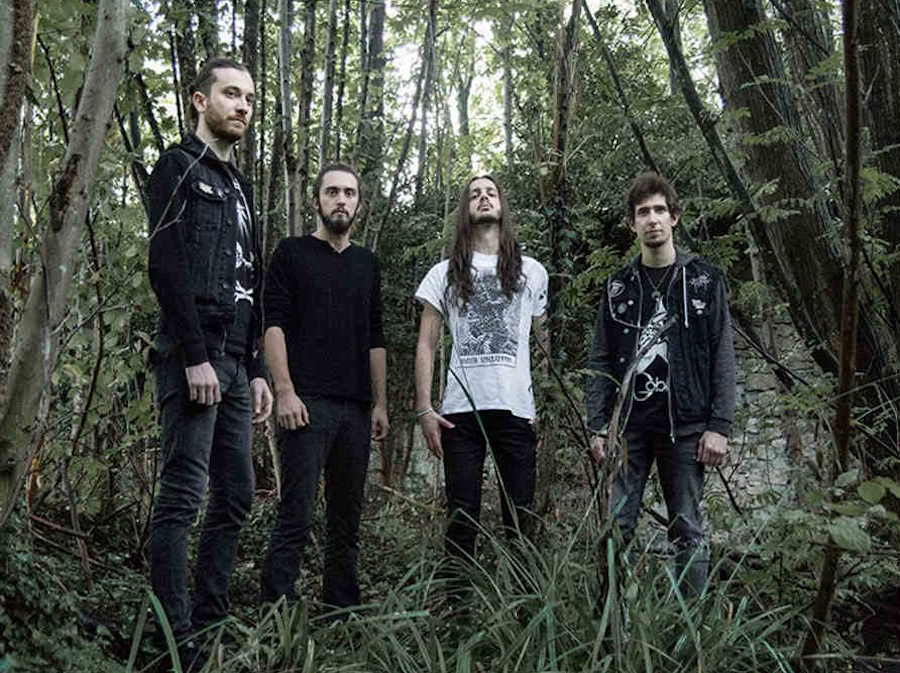
 Some albums make you want to listen to them again and again; others make you want to find out more about the people behind them. EPITAPHE’s “III” belongs firmly to the latter category. After listening to this highly imaginative and adventurous record, I found myself wondering where such an unusual combination of ideas, atmospheres, and influences comes from – and that was what gave me the idea to approach the band for an interview. EPITAPHE’s music is difficult to put into a single box. Their songs combine a great deal of experimentation with the rawness and intensity of extreme metal, moving freely between brutal passages, acoustic sections, melancholic moods, and atmospheric soundscapes. At the same time, there is a strong sense of purpose behind all these contrasts, making “III” feel like a carefully constructed journey rather than simply a collection of different musical ideas.
In the following interview, we talk about the band’s beginnings, their gradual development and the evolution of their sound, as well as the writing and recording of “III”. We also discuss the role of the saxophone, the balance between heaviness and quieter passages, the difficulties of categorizing their music, the French extreme metal scene, and the influence of the landscapes surrounding their home in the French Alps. Laurent (Guitar), a member of EPITAPHE, answered my questions and offered an honest insight into the band’s approach, their past, and their plans for the future.
Let’s go all the way back to the beginning – how did EPITAPHE actually come into being? What brought you together back then, and what did you expect from the band?
We are childhood friends, and we started the band when we were teenagers. For the first few years, we covered classic metal songs, without any bigger plan. Then we started writing our own material, and things got a bit more serious. The idea of going into a studio to record our own songs, having beautiful cover artwork printed on vinyl, and so on, was an absolute goal for me when I was a teenager. So I’m very happy that we’ve managed to release our third album together (fourth, if we take our side project, Eventide, into consideration).
The first years were apparently complicated by the fact that some of you were living abroad and the band went through some long periods of inactivity. What kept you together during those times?
We needed several years to develop our musical identity. EPITAPHE was our first band experience, and we were absolute beginners back then. We had a lot to learn. We wrote songs in different genres and tried different tunings before slowly finding our own sound. These years of development were also slowed down by the fact that different members were living abroad. That is still the case to this day, by the way, but now it’s much easier to work remotely. There were some difficult times, but I think we all believed that we could create something worthwhile together.
Is there a common thread running through all of your releases that you consider quintessentially “Epitaphe”? And on the other hand, what makes each of them unique?
I guess the album-oriented approach and ever-evolving songs would be the common thread running through our discography. Each new album builds on the foundations of the previous ones. So, if we had to sum it up quickly, I’d say that “I” laid the foundations of the band and has a more straightforward, old-school approach to riffing. It is very rooted in extreme metal, while already showing an interest in acoustic guitars and atmospheric sections (elements that took on a more prominent role on the following records).
“II” is where I feel we truly found our musical maturity, with more “progressive” songwriting and a deeper focus on those atmospheric elements. It’s a very important album for us.
“III” is our most personal and accomplished record to date, expanding on the emotional aspects of our music while also being more abstract and experimental. It’s the one we feel closest to today.
Your music has gradually become more diverse, incorporating an increasing number of different instruments and forms of expression. Was this a natural expansion of your musical possibilities, or was it a conscious effort not to repeat what you had done on previous releases?
It’s something that came naturally. Over the years, we’ve gotten better at writing songs, our musical tastes have evolved, and we like to try different things. It’s important for us not to repeat ourselves too much. That said, we didn’t have to make any “effort” to avoid that. So far, the songwriting process for each new album has always led us to new places by itself.
And now, “III”. Four years after “II”, you have released a new album. When did you first start working on the material for “III”, and how long did it take before you felt that the album was truly finished?
We wrote the album between 2023 and 2024, and it was recorded, mixed, and mastered between 2024 and 2025. The album took longer to be released this time because the lead times for vinyl pressing are very long, and they were extended even further by a defective first test pressing.
When you compare “III” to your previous albums, would you say it is more of a continuation of the path you have been following, or does it represent a new beginning?
As I said earlier, each new album builds on the foundations of the previous ones. We see “III” as a natural continuation of our musical journey. We couldn’t have made this record six or seven years ago without the experience we gained and the things we learned from the previous albums.
“Half-Light” is a relatively short track, while “Windswept” and “Spring Frost” are huge compositions. What determines whether an idea needs two and a half minutes or sixteen minutes to fully develop?
The songwriting process can be a bit mysterious and hard to explain. We just “know” when a song is done. The length doesn’t really matter that much. Our songwriting is very album-oriented, and we try to be really careful about the overall balance of the album when listening to it from start to finish.
The saxophone is once again a prominent element on “III”. Do you now consider the saxophone an integral part of the EPITAPHE sound, or do you still see it simply as one of many instruments you can use when the music calls for it?
We really enjoy the saxophone interventions on the new songs, and it’s probably something we’ll keep exploring in the future. That said, we don’t want to overuse it either. It would be a shame to make it too systematic and predictable. We’ll include the saxophone only when the music calls for it. But it’s definitely a nice tool to have in our toolbox!
 “III” contains not only brutal death metal passages, but also very gentle, melancholic, and almost ambient moments. Is it just as important for you to know how to make the music quiet as it is to make it as heavy as possible?
On this album, there’s almost a 50/50 split between extreme metal and acoustic/quieter moments, which is a pretty risky bet for a death metal record!
But those sections are very important to us, just as much as the metal ones. The whole album is structured around the contrasts between the different atmospheres.
EPITAPHE have been described as death-doom, funeral doom, death metal, black metal, avant-garde metal, progressive metal… Does it bother you at all when people try to put your music into a particular genre?
No, we don’t mind at all. It’s funny to hear people trying to pin down and categorize what we’re doing. We don’t really think about it. We’re simply writing songs that we like and connect with, and it’s not a big deal if we’re a bit outside the box.
Do you think being difficult to categorize is an advantage nowadays, or does it make it harder for a band to reach a new audience?
I don’t really know. I feel there are a lot of generic bands today that follow a very established formula. In that regard, being a bit hard to categorize is probably a good thing from an artistic point of view. But maybe that’s not what a big label would say!
Your music is often described as psychedelic, claustrophobic, and highly atmospheric. Does the landscape and nature of the French Alps influence you when you are composing?
Yes, the landscapes that surround us are a strong source of inspiration, both for our lyrics and for the atmospheres we try to convey through our music.
France has an exceptionally strong black metal scene. How do you perceive it from within? Do you think French black metal has any common characteristics that distinguish it from the Scandinavian or Czech scenes?
I’m very sorry for the disappointing answer, but I don’t have much interest in French black metal, so I can’t really give you a proper answer to that.
Do you see any real connections between the death metal, doom metal, and black metal scenes in France, or do they still largely exist as separate worlds?
Sorry again for the poor answer, but we’re not a live band. We don’t have many connections with other bands, underground promoters, and so on, so we’re probably not the best people to answer that. I don’t think there are enough bands, labels, and concert venues close to where we’re based to call it a scene, or at least to see a distinction between different extreme metal styles. It’s maybe more visible in other parts of France.
EPITAPHE comes from Claix, a town in the Alps near Grenoble. What would you show someone who had never been to Claix? Does your town have its own music community, rehearsal spaces, concerts, or underground scene?
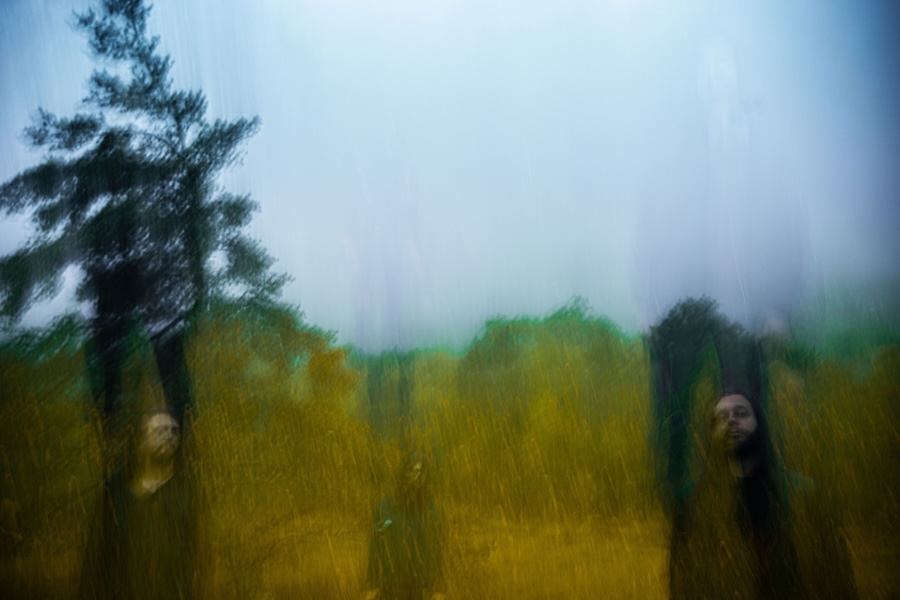
Claix is a small town. There’s no concert or underground scene there. I can’t even name another metal band from Claix! That said, it’s a lovely place, close to the mountains and with a beautiful peatland area above the town. That’s where we took the promo pictures for “II”.
Are there any social issues in contemporary France that particularly concern you and that somehow find their way into your lyrics or the overall atmosphere of your music?
The political and social situation in France is very tense right now, as it is in many other places. Of course, it concerns us on an individual level, but it does not really influence what we are doing with EPITAPHE. The lyrics of our songs are more focused on inward feelings and reflections on death, the passing of time, the impermanence of being…
Is your goal to bring EPITAPHE to as many people as possible, or is preserving complete artistic freedom more important to you, even if that means remaining an underground band?
If we have to choose, preserving our complete artistic freedom is obviously the correct answer. If we wanted to reach the biggest audience possible, we wouldn’t be playing this kind of music! That said, with each new album, we’re happy if we manage to reach a slightly wider audience, even though we know we’re doomed to remain a very “niche” band.
If I asked you about EPITAPHE ten years from now and you could describe in just one sentence where the band has ended up, what would you like that sentence to say?
I’d be very happy to know that over the next ten years, we’re going to release a bunch of new and great albums!
Thank you very much for the interview. I wish you all the best – your music certainly deserves it.
Thank you very much for the in-depth interview and for your kind words. We’d like to finish by pointing out that our three albums are available as “name your price” digital releases on Bandcamp, so everyone can support us in whatever way they can. We also have physical editions available, with beautiful packaging that includes credits and lyrics.
ALL