
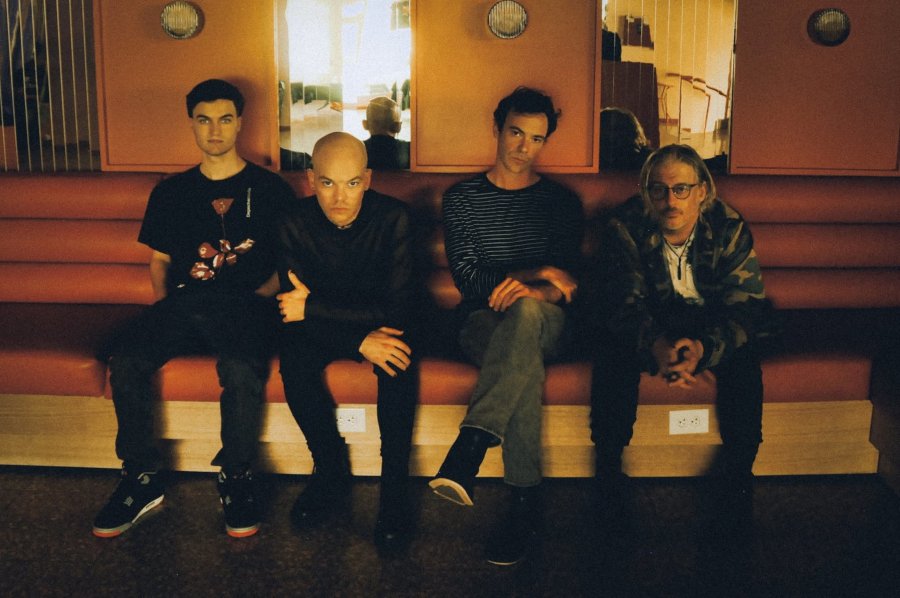
 Industrial metal never truly disappeared. It simply stepped out of the spotlight, waiting for bands capable of giving it a fresh identity. One of those bands is undoubtedly the American outfit BLACK MAGNET, whose music combines crushing riffs, industrial soundscapes, and a surprisingly deep focus on personal growth, spirituality, and the power of the human mind.
On September 3, 2026, the band will perform at Kabinet Múz in Brno, Czech Republic, where they will kick off their European tour. To mark the occasion, I spoke with the band’s founder, vocalist, and primary songwriter James Hammontree, who openly reflects on BLACK MAGNET’s evolution from a solo project into a full-fledged band, the creation of “Megamantra”, his musical influences, and why he believes true strength comes not from anger, but from taking responsibility for your own life.
In the interview, you’ll learn about the impact that bands such as MINISTRY, GODFLESH, DEFTONES, and KRAFTWERK have had on his music, why he believes in the power of affirmations and meditation, what he thinks about society’s growing dependence on technology, and why he’s so excited to play his very first show in the Czech Republic.
BLACK MAGNET started out as your solo project. At what point did you realize it had become more than just your personal vision and had grown into a real band?
Well, after playing live as a solo act out of necessity, because I couldn’t find anyone at the time who really fit, I realized I could do a lot more with the sound live if I had more power behind it, which meant bringing in more members. Once I started adding people carefully, everyone brought their own flair and interpretation to the songs, which in turn gave me new ideas and different approaches to writing.
Over time, that collaboration started happening earlier and earlier in the process, to the point where everyone was contributing ideas during the initial stages of a song rather than just interpreting something I had already written. I’m still the primary songwriter, but it definitely feels much more like a band now. It really came down to finding the right people with the right vibe who understood what I had already established with BLACK MAGNET, and having them involved has only made the project stronger.
Looking back at “Hallucination” Scene today, what do you think still holds up, and what would you do completely differently if you were making it now?
That’s a great question. I think the dynamism of the songs is still one of the album’s biggest strengths. At the time, I was really exploring every direction I could possibly take within the wide and varied world of industrial music—whether that was GODFLESH, FRONT LINE ASSEMBLY, BIG BLACK, SKINNY PUPPY, or even more mainstream stuff like NINE INCH NAILS and ROB ZOMBIE. I think that variety still works, and the production holds up really well too.
If I were making the album now, I’d probably put a lot more focus and preparation into the vocals. It was the first album I had ever sung on, and I was pretty inexperienced at the time. Looking back, I definitely think I could have done better vocally with the experience I have now. Other than that, I might have included a couple of the songs from the original demo tape. I still really like that material, and I think some of it would have fit well on the record.
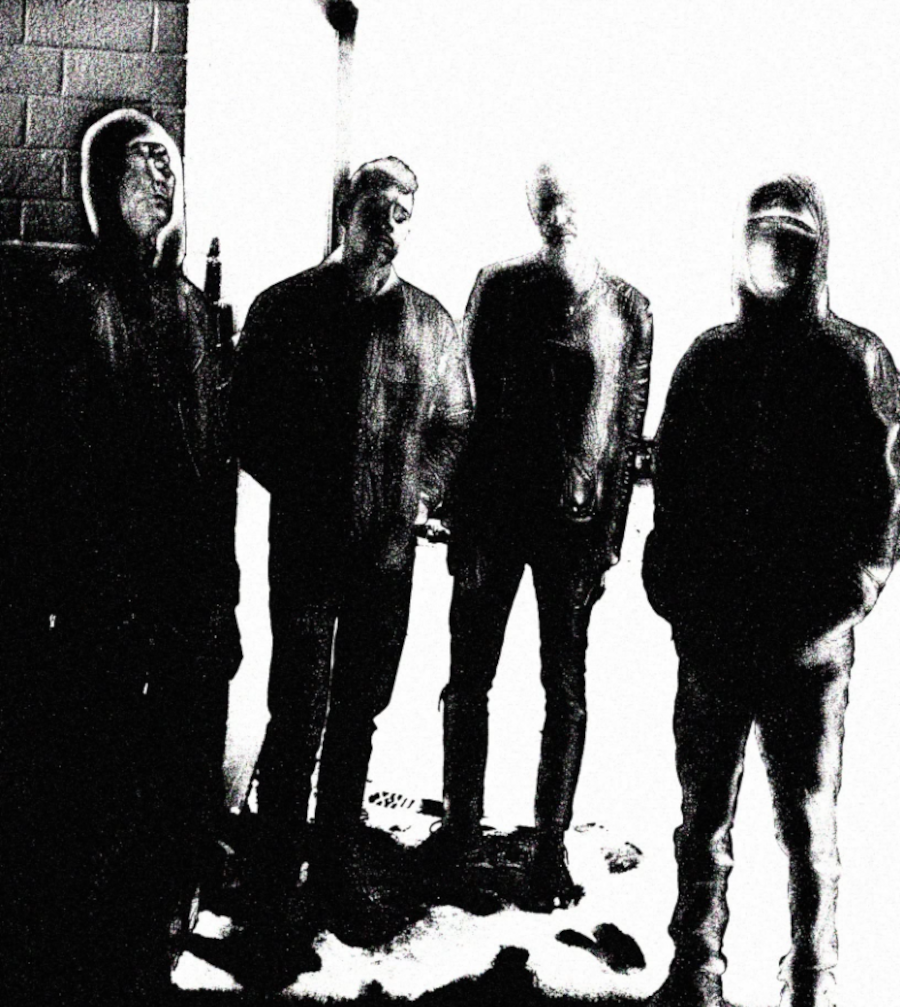
Oklahoma City isn’t exactly a place most people associate with industrial metal. How has living there shaped you as a musician and songwriter?
Growing up in Oklahoma City, it wasn’t exactly the height of culture, so my friends and I learned to make our own fun. Skateboarding, starting bands young, having house shows, trading records and tapes, that kind of thing. We were lucky to have a punk club called the Green Door, where I saw a lot of great bands like AGNOSTIC FRONT, RANCID, and a bunch of the punk classics.
There was also a great record store right next to the club that I eventually ended up working at, which led me directly to where I am now. The owners exposed me to a lot of weirder and much more artful music like BIG BLACK, GODFLESH, MINISTRY, and a lot of the stuff I’m still into now.
But overall, OKC was a bit of a dead zone. I was glad to live about 2.5 hours from Dallas, which had pretty much everything you’d ever want to see.
Do you think BLACK MAGNET would sound the same if the band had formed in Chicago or Los Angeles instead of Oklahoma City?
Another great question. The great thing about OKC was that it was so cheap to live that I had a bunch of extra time to work on music. Maybe the culture would have driven me and affected me in a stronger way if I’d lived in one of those major cities, but maybe I would’ve had less time to develop my craft. It’s hard to say.
With the advent of the internet, everything got easier and everyone was able to quickly dive deeper into subcultures. In this case, that was a good thing for me. I’m not sure if it’s been a good thing overall. I do usually love playing the major cities more than my hometown, though. If someone had just one day to spend in Oklahoma City, what would you tell them they absolutely shouldn’t miss.
I would say the Murrah Building bombing memorial. It’s probably the most powerful and culturally impactful, though tragic, thing that has happened in OKC. The city has expanded a lot since then, and now there are lots of beautiful parks and restaurants with some really great food. The south side, where I grew up, has a great Mexican culture and some of the best food you can find in America.
Industrial metal was one of the biggest forces in heavy music during the ‘90s. Why do you think it’s much less visible today?
Great question. Who doesn’t like crushing guitars with the sounds of computers exploding? I ask myself that question a bunch. Aside from the bigger bands like NIN, RAMMSTEIN, MINISTRY, and MARILYN MANSON, I just don’t think there was a lot of high-quality, artful industrial music compared to straight metal, death metal, or even traditional goth. A lot of industrial gets disguised in cyber goth and bad fashion, and I just don’t think the quality of songwriting exists as strongly across the board.
I chose industrial because I loved the sonic palette and what you could do with the genre. There are definitely bands changing the landscape for the better, and we hope to be one of those bands.
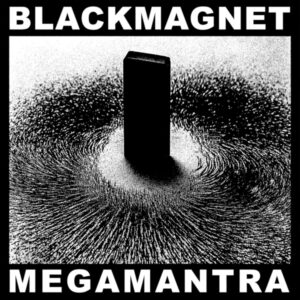 On Megamantra, I can hear influences not only from MINISTRY and GODFLESH, but also from ’90s alternative rock. Was there a particular album from that era that had the biggest impact on this record?
Most definitely. DEFTONES’ “Around the Fur”, ALICE IN CHAINS’ “Dirt”, SOUNDGARDEN’s “Screaming Life”, and even stuff like MASSIVE ATTACK and RADIOHEAD were huge for me growing up, to name a few.
Industrial music is often associated with electronics, but BLACK MAGNET feels like a very riff-driven band. Where do you personally draw the line between industrial music and Metal?
It’s tough because I’m a metalhead at heart and can’t help myself when it comes to writing chuggy, mean riffs. But on the flip side, I love electronic music, EBM, noise, trip-hop, ambient, and all types of electronic music.
I love the fusion of metal with those genres, so I really set out to bring them together. There are times when I want to focus more on the electronic side, and we have completely electronic songs, but somehow they usually just sound better with heavy guitars. I can’t help myself.
Is there one album that completely changed the way you think about music?
KRAFTWERK – Radio-Activity.
The title “Megamantra” almost sounds like a spiritual concept. What does it mean to you Personally?
It definitely is. While writing the album, I was personally experimenting with affirmations and their effect on my creativity and confidence. I began writing each song about a different element of overcoming some type of struggle or hardship, and each song became somewhat of a mantra or affirmation in itself. Collectively, they make one big mantra that became the overall statement of the album. That is the “Megamantra”.
Your lyrics often explore themes like consciousness, mental strength, spirituality, and personal transformation. What first drew you toward those ideas? Do you think modern society pays too much attention to technology and not enough attention to our own minds and mental well-being?
These concepts are absolutely HUGE for me. I got really interested in meditation, New Thought, affirmations, New Age ideas, self-help, metaphysics, left-hand-path philosophy, and all types of progressive and generative thought that I could use as tools for my own personal growth.
A writer, and now friend, Mitch Horowitz led me to a lot of these concepts through his books. He’s an occult historian, publisher, and New Thought philosopher who has a very unique and direct way of siphoning these ideas down, explaining them, and tracing them back to their original sources. He’s so brilliant, and I can’t express enough how thankful I am for his contributions or recommend enough that people read his work. He ended up writing the foreword for “Megamantra”, and I’m forever in his debt.
I definitely think the human condition is much too steeped in technology. If it weren’t technology, it would probably be something else, but technology can be particularly damaging in ways I don’t think we even understand yet. And I’m guilty of it too, as most people are.
I foresee a big revolt against the cringe of social media and a real yearning and hunger for human connection, especially among younger people. I hope it continues, and I hope it bolsters the subcultures of shows, art, music, and everything that operates on a DIY level.
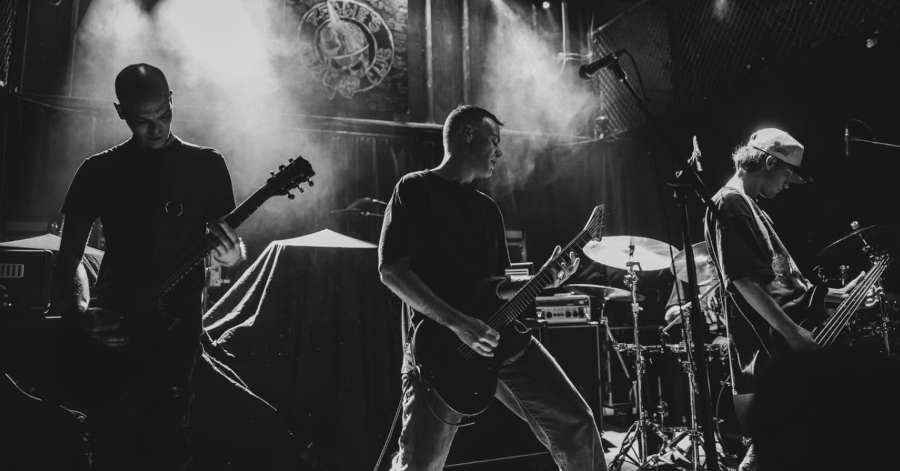
When I listen to “Megamantra”, I don’t hear an album that’s driven by anger. Instead, it feels like an album about discipline—about mastering your own mind. Is that a reading you agree with, or am I completely off the mark?
You’re totally on point! It maybe started with anger, anger at myself and the world around me, but I discovered that the only real healing and problem-solving I could do had to happen within myself. And yes, it’s about mastering my own mind as much as possible.
There is so much power in not blaming other people and taking responsibility for what you can control in your own life. I think many people lose sight of that and want a quick answer without digging inside themselves. You can never control the outcomes in the world until you control yourself, and many people put the cart before the horse in that regard.
Do you see your lyrics as deeply personal reflections, or do you prefer to leave enough room for listeners to find their own meaning in them?
They are deeply personal reflections, but I also enjoy having a sense of poetry and ambiguity to them. I hope I write enough to give a certain sense of the concepts I’m getting at, while still allowing people to find their own meaning in their own way
I definitely want to leave room for that, and I love hearing what people have to say about the songs and how they interpret them, just like you did with your question in this interview.
When you’re writing a new BLACK MAGNET song, what usually comes first: a riff, a rhythm, or an idea?
It usually kind of happens all at once, at least with the core stuff. A riff or beat, a general vibe or attitude, and then a concept communicated through one or two lines of a lyric.
Once I have a special feeling or can foresee something developing with momentum and excitement, I can start digging into the details. I need some vague, ethereal idea to get me started, and if it’s strong enough, the rest follows. Some songs take weeks to write; some I’ve written in 45 minutes. But definitely the beat, the riff, and the concept are the top three initiators.
Do your best ideas come while you’re actively working on music, or when you’re doing something completely unrelated and not thinking about it at all?
Another great question. Definitely both. But some of the greatest ideas have come in the shower, working outside, lifting weights, or cooking. Then, bam, out of thin air something is in my head! I rush to write it down, record it on my phone, or, in the best-case scenario, run into my studio and start working on it.
I believe putting yourself in the mental target zone is so much more important than beating a dead-horse idea that has no real momentum. It’s very spiritual and difficult to nail down, but being ready to receive infinite knowledge is one of my goals in this way.
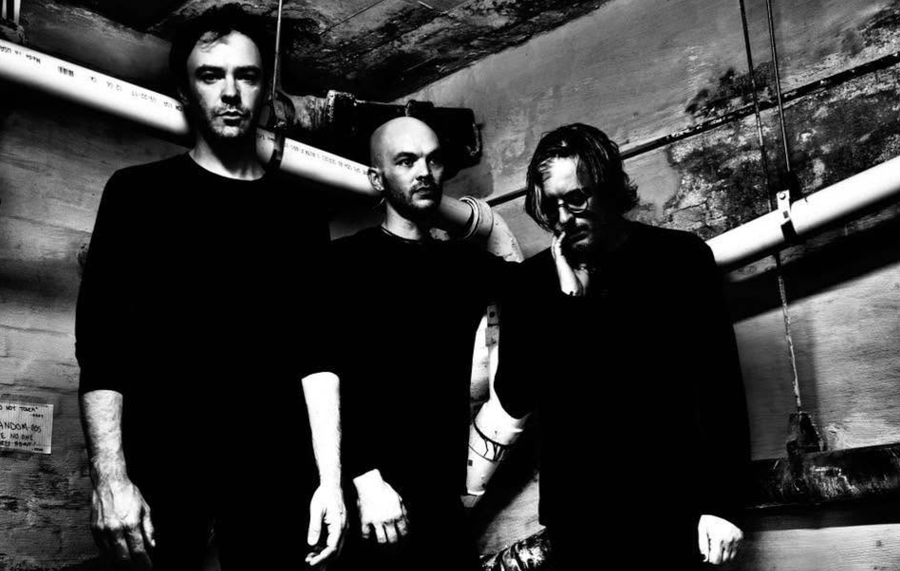
This tour will also bring you to the Czech Republic. What are your expectations for playing in front of a Czech audience? And when people leave your show afterward, what do you hope they’re taking home with them?
I’m very excited about the Czech Republic. I’ve never been. I’ve been to Poland and some surrounding areas, but never Czechia. I hope the audience enjoys it, and since it will be our first show of the tour, we’ll definitely be ready to play and bring the heat.
I never really think about what the audience is thinking, but I hope they’re left with a feeling and mental picture of the intensity and spirituality through heavy music that we seek to bring to the table. I’m also excited about the beer! Ha! Lots of great architecture too.
Are you familiar with any Czech bands or the Czech metal scene in general?
I’m really not familiar with it, but I am greatly enjoying this interview. They’re announcing the opening band today, so I’m excited to listen to them before the show.
Is there a country you’ve never played before but would really love to visit with BLACK MAGNET?
Honestly, Czechia is one of them, but I’d also really love to play Romania and the Baltic region. I’m a big fan of traditional saunas, so that’s another reason.
Thank you very much for taking the time to do this interview. I wish you all the best for the future. Your music genuinely deserves to be heard, and I hope you have a great time in the Czech Republic!
Thanks so much for taking the time to put together such thoughtful questions and for the kind words. I really enjoyed answering these! Let me know if you need anything else from me.
ALL