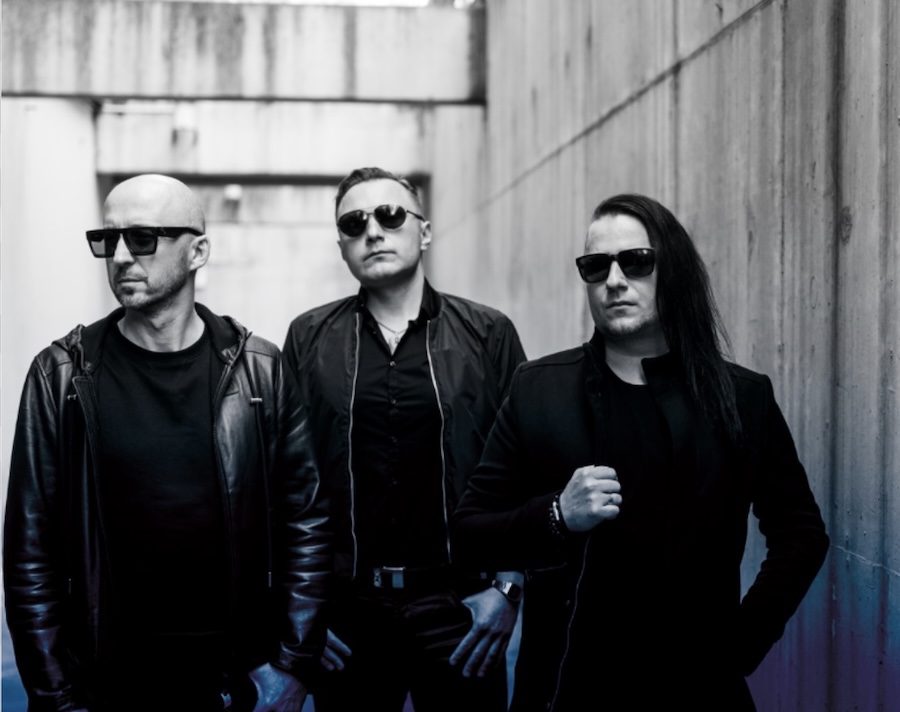
 UNDERTHESKIN is one of those projects you don’t just put on as background music. These are recordings that demand time, attention, and a willingness to dive into the darker layers of emotions and sounds. These days, Void (Mariusz Łuniewski), the project’s sole full-fledged member, is releasing a new album titled “Never | Return“—a record I’m currently exploring with great enthusiasm, and one that once again confirms his sensitivity for melancholy, tension, and a raw atmosphere on the borderline of dark wave, goth rock, and post-punk.
However, the interview with Void does not focus solely on this hot new release. We also look back at the previous album “Negative“, the gradual expansion of the entire project, live performances across Europe, and the experiences gathered along the way. There is also a glimpse behind the scenes—personal reflections, creative impulses, and other activities that shape UNDERTHESKIN as an authentic and constantly evolving entity.
The result is an open and focused dialogue with a musician for whom UNDERTHESKIN is not just a band, but a means of expression and a long-term journey. If you are drawn to dark music with emotion, depth, and inner urgency, this interview should not be missed.
Mariusz, to begin with, I’d like to go back to the previous recording, “Negative”. How do you explain that it was so successful…? Well, at least within the genre community. Did that make continuing with new material feel even more like an obligation for you?
Of course, N E G A T I V E was undoubtedly a success – though much depends on how one defines success. It would certainly have gained much more popularity if a full tour promoting the album had taken place and if we had managed to do everything we had planned — plans that were brutally interrupted by Covid. But still – I remain very grateful for everything that surrounded the album and the way it resonated within the community.
As for the reasons behind that success, it certainly wasn’t because we come from an “exotic” country — Poland is probably no longer seen that way (laughs) – nor was it the result of a sudden wave of hype. In the case of UNDERTHESKIN, it is almost always the outcome of honest work, the heart & soul invested in creating the record, and, of course, the element that is always essential: a touch of luck, so that the music finds its way to listeners.
As I mentioned in my review, “Negative” is a very personal record for me. During the Covid period, I had the chance to walk through an empty city, and listening to UNDERTHESKIN became almost a ritual for me. Is this kind of interaction important to you as an artist?
Believe me, this is something of immense importance to me. For any musician or artist, perhaps the most beautiful affirmation one can receive is that their work touches someone’s soul – that it becomes meaningful, intimate, and deeply personal. If I had to choose what is truly the most rewarding aspect of creating and performing music, it would be precisely this. I am sincerely grateful for your words and the way you have shared your experience.
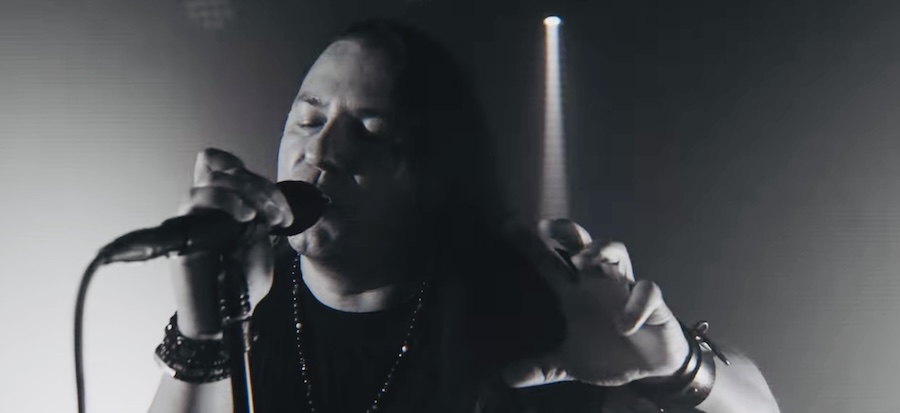
Do fans often talk to you about your music and lyrics? Are these things you like to discuss, or should they remain somewhat hidden?
Yes, it happens quite often, especially after concerts. These are absolutely not topics that need to remain hidden – I’m always happy to talk if someone wants to listen. And it’s an extraordinary experience when someone who seems like a complete stranger tells you about events or emotions connected to the music you’ve written. It’s fascinating how a lyric can take on a completely different meaning or context in someone else’s life. Or, conversely, how my own experiences resonate so strongly with others who find in this music their own place and refuge – that’s truly wonderful.
This is also why, for the first time, I decided to include all the lyrics in the album booklet. In the past, I felt I was diminishing what I had written by leaving only fragments or quotes. But conversations with fans, as well as with people close to me, convinced me that my writing holds real value — as part of the broader art form that encompasses lyrics, music, and visual design, each element equally important.
How did you personally experience the Covid period? Was it easy for you to focus more on making music, or was it actually a time full of problems? I remember that during that time you also launched your black metal project, WOLFPATH…
Thinking about how to answer this question, I realized that N E G A T I V E was also a victim of Covid. We had less than a year after its release to promote it and play concerts. Then everything collapsed and faded away. The world and people became absorbed in caring for themselves and their health, trying to find their way in that situation. That madness only ended in 2022 – three years of silence in the ether — and it killed more than one good album or band. I’m grateful we survived.
Returning to your question – it was an extremely intense time for me. Starting with the writing process for “Negative”, which was probably the most depressing period of my life. Shortly after the album’s release, I ended a long‑term, toxic relationship. What followed was an emotional rollercoaster: divorce, the forced separation from my beloved dog, and then… the pandemic. In some sense, it gave me space to put things in order, but at the beginning it hit hard – many canceled shows, all of which was very demotivating. I remember spending hours every day in the studio, recording sketches of songs. Nothing seemed to fit together, everything felt weak. Luckily, I didn’t throw those ideas away, because some of them later developed beautifully on the new album.
Then came a complete change of life – moving, turning everything 180 degrees. I started living with my current wife, and after years the sun finally came out in my life. Yet I was still wrestling with the past. The period between the first and second UTS albums left so much darkness in me that just recalling it could inspire three more very “dark” records. At the same time, problems began within the band – demands, disappointments. Our then‑bassist, started setting conditions for cooperation, unpleasant situations arose, which deepened my creative impasse and the need to distance myself. This eventually led to parting ways with the bassist. It was a painful episode, because we had all been close – almost like family – and such a split felt like a rupture inside.
Because of that creative deadlock in UNDERTHESKIN, I turned to the project WOLFPATH, which brought me a lot of joy. For me, it was the completion of a chapter from my youth, the fulfillment of a musical dream, and at the same time an outlet for truly negative emotions. It allowed me to close a certain stage and complete a transformation. After releasing
WOLFPATH and once the pandemic ended, we moved forward with a new lineup – a new bassist, who was also an old friend from DEATHCAMP PROJECT. The band once again became a family. We debuted at WGT in Leipzig with an excellent, packed concert that gave UNDERTHESKIN strength and momentum again.
 UNDERTHESKIN established themselves on the goth scene incredibly quickly. You’ve already played in several European countries. Which place did you personally like the most? Can you share an interesting experience that happened during your travels?
I think I started UNDERTHESKIN at a very good moment back in 2015, when the new post‑punk scene was growing rapidly and hadn’t yet reached the oversaturation we see today. Thanks largely to the power of Bandcamp, I managed to attract considerable attention around the first self‑titled album – it generated perhaps the biggest peak in the band’s history and, for a while, it really felt like a snowball effect. That also translated into fantastic concert opportunities. Our third or fourth show took place at the Sacrosanct Festival in the UK, which was a huge honor. Shortly after came Klub Död in Stockholm, Ombra Festival in Spain, and our first time at WGT… I could go on listing them endlessly.
Every trip is a treasure trove of memories. The freshest and most vivid one was our recent gig at Whitby Goth Weekend in the UK – a beautiful town, completely filled with people in costumes, like a real Halloween village! It was incredible, all in the atmosphere of Bram Stoker’s Dracula (since the place is tied to the book and its author) and under the shadow of the epic ruins of Whitby Abbey. Absolutely surreal. I would definitely love to return there – if not with the band, then at least privately.
Do you still get stage fright at concerts? Do you remember the first time you ever stood on stage and what it felt like?
Of course! Always! In fact, I believe it’s quite an important and necessary aspect. The adrenaline kicks in and releases an incredible mix of hormones — stress, joy, sometimes anger, even the instinct of survival. It’s an amazing and, I would say, rather addictive cocktail.
I mostly feel the stress before concerts – I can’t stand the waiting. Those last five minutes before stepping on stage seem to stretch into eternity. But once I’m on stage, I love that moment – I’m filled with happiness and gratitude that I can do what I love. And even more beautiful is seeing the audience absorb the sound and lose themselves in it.
Of course, I remember my very first time on stage – it was back in high school with our black metal band. The emotions were overwhelming, and my head was full of hopes and dreams. It’s a great joy that, almost 20 years later, I still have the privilege of stepping onto the stage and fulfilling those high‑school dreams.
The main topic of this interview is the new album, N E V E R | R E T U R N . In your opinion, how does it differ the most from Negative? At what point did you realize that the mood of the new record would be noticeably different?
I don’t really see it that way. For me, N E G A T I V E was already quite different from the first UNDERTHESKIN record, but the key has always been to preserve our own identity, and that’s what I focused on when composing the new material – while remaining fully open to whatever life and experience bring. For me, change is the essence of growth and the driving force behind my desire to create. At the same time, it’s equally important to respect our history and the original idea of what the band was meant to be.
That, I think, is the key to the third album. Vocally, I opened myself up completely – I allowed myself to do much more and with greater courage than before. I feel that my voice is no longer just another instrument I handle; it has become something much more – the most organic and essential element of the music. On the new record, I let it resonate fully. At the same time, I often reach for very raw sounds that, in my opinion, recall the earliest UNDERTHESKIN recordings. There are plenty of old‑school drum machines and 80s synths. I don’t overcomplicate the music – I allow for imperfections. I love that human factor; for example, I try to record most instruments in a single take rather than piecing them together from blocks and grids. I often play synths by fingers instead of programming them in MIDI etc. It gives the music a much better feeling I guess.
As always, I focused heavily on the bass guitar parts, which for me – after the vocals – is the most important instrument. I tried to make sure its lines were truly engaging and carefully thought out. The time I had to record this album also mattered – over several years I was able to let ideas rest and mature. Another important aspect was incorporating more of TomTylor’s ideas into the songwriting process. Altogether, I think this creates a new quality in my music. But on the other hand, if you know UNDERTHESKIN, you certainly won’t feel lost when you first encounter N E V E R | R E T U R N. It’s simply a continuation of my journey as both a person and a musician.
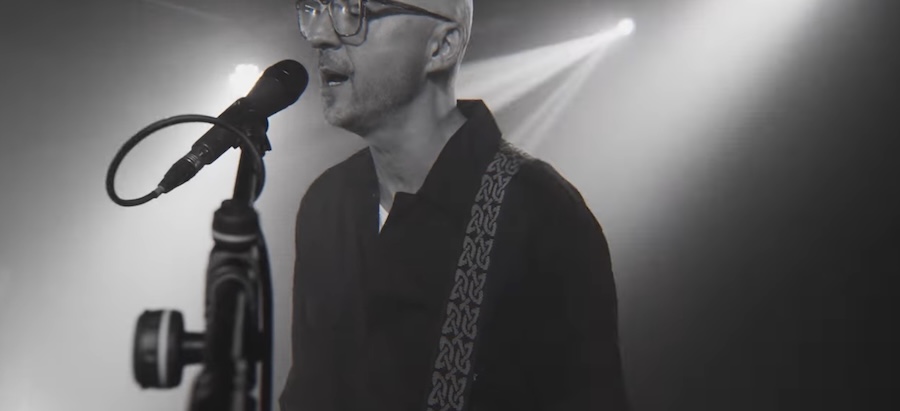
I would say that on the new album the connection between the genre’s roots and a modern sound is even more emphasized. Did you focus on this aspect specifically? And how do you view bands that, paradoxically, try to sound deliberately old?
Yes, this is a very important aspect for me – I’m not really interested in simply playing retro‑style music. Of course, I often reference the genre, and I make sure that the whole history of the music I come from and am a fan of finds its place in what I create. But at the same time, I don’t want to sound like for example – THE CURE. I try to combine my own sound and priorities with tradition – which gives that warm, familiar feeling when you listen – while avoiding the well‑worn retro path that many colleagues in the scene follow. Is that the right approach? I don’t know – sometimes it seems it would be easier to go for a straightforward dark stylization, because that almost always works quickly and effectively. But unfortunately, that approach produces a flood of bands that sound like something you’ve already heard before. And you ask what I think of that? I have nothing against it – I like and respect some of those bands – but it’s not my path, and it’s not something that would give me artistic satisfaction.
I know you got married some time ago. Was this life change also one of your inspirations? I sense a certain hope in your lyrics…
You must have a very good source of information. 🙂 But seriously, yes — it’s true, and I think it’s the best change in my life. My wife Jovita is an incredible person, deeply supportive of my artistic journey, a huge fan of my music too. She’s with me in every moment of doubt and gives me strength, which has certainly influenced how the new album sounds. I had hundreds of moments when I felt like giving up, when I doubted myself. She never doubted me for a second, and I’m very grateful for that.
It’s a huge contrast, because my earlier albums were created in complete isolation, almost as a way not to lose my mind and to release all that negative aura. But to keep things real – the time I was writing “Never|Return” was filled not only with positive aspects and the hope you mentioned, but also with extreme emotions – the loss of loved ones, death. That had a massive impact on the emotional weight of the record. Death and the birth of something new are undeniably part of the cycle of life – often difficult, but also deeply inspiring, when happiness mixes with the deepest sorrow.
So I definitely wanted to include a cleansing element of light within the prevailing darkness. At the same time, I have this trait that probably never changes – I simply can’t create cheerful things. I don’t listen to that kind of music, and those aspects don’t inspire me to create. Why is that? I don’t know – maybe an innate tendency toward melancholy. Even in pop music, I always find the elements that reach deeper and carry a certain shadow.
When I talk to musicians, a frequent topic is the challenge of combining artistic life with family life. How do you manage this personally? Do you have your priorities clearly set so that everything works smoothly? You practically wrote and recorded the whole album by yourself. How well does this way of working suit you? Are you long used to it, or would you actually prefer rehearsing together in one room with friends, like in the old days?
Of course, it’s a challenge – often a frustrating one. Over the years I’ve managed to develop a system where I can catch fragments of time and devote them to making music. The hardest part is finding time for composing – I like to have peace and a whole day just for myself, the studio, and the instruments (and such days don’t happen too often). It can be frustrating because sometimes when you finally get that day, you end up sitting for three hours and nothing interesting comes out. But music has always been incredibly important to me – without it, without the whole process, my mood drops and I fall into depressive states. I think my loved ones understand this and give me the space I need when I need it most.
When that’s not possible, I use free moments and stolen hours for less creative tasks – refining the snare sound, arranging – the more “mathematical” aspects that aren’t as demanding for me. Still, it’s always a challenge, because both I and the musicians I work with have families and jobs that affect how the band functions, and we have to find ways to deal with that.
As for the second part of your question – I think I’m fairly aware of my strengths and weaknesses. Choosing to work alone has always been about two things: first, if I can do something well myself, I prefer to do it with my own hands; second, the inclusiveness of having most of UNDERTHESKIN’s sounds come directly from me adds cohesion and authenticity to the music. This way of working is also practical, because it allows me to use those small time windows effectively for creative work. It also avoids problems with musicians’ egos and disagreements about direction or artistic vision.
On the other hand, as you know, on the new album TomTylor – with whom I’ve played and been friends for years – composed some truly valuable sounds. I’m always open to collaborating with people I trust both artistically and personally. For this third album, Tom had a free hand to contribute to any track; in the end, he left his mark on three of them, but I don’t rule out a bigger role for him in the future if he feels like it. I’m aware that the music could be “better” if more people were involved, but it could also lose that underlying element which, in this case, is extremely important.
You told me that finishing the album was very difficult for you. What happened? Is it true that the last step tends to be the hardest?
Yes, that’s true – although during the last year I was fully focused on finishing the album, and things were going quite well. Often the mixes came together very quickly – for example, the second version of a mix was already great, and we didn’t have to dig in and struggle through dozens of polished versions (as had happened in the past). So in that aspect, the work was going smoothly.
It was only at the very end, when I needed that final song to complete the album, that obstacles appeared. I had at least three tracks in an advanced stage, but none of them met my expectations 100%. And as you know, I take quality very seriously – I don’t accept fillers or tricks like “let’s make a long outro and call it a 35‑minute record”. 🙂 So until September 2025, I honestly didn’t know if I’d be able to release the album this year. Luckily, I found another track that was basically finished and just waiting to be discovered, and it fit perfectly into my vision for the record.
In the end, I managed to finish the mix on time and schedule the premiere exactly as I wanted. Unfortunately, this process did affect the shipping date of the vinyls, which will only reach my hands – and yours – in January 2026.
When you finished the album, did you play the new songs to your close ones to get some first reactions?
Of course, that always happens. I have a circle of close friends and family who have to listen to my mixes, often the early versions. I watch their reactions – most of the time they don’t even need to say anything, I can usually tell from their faces whether I’ve nailed it or still have a lot of work to do. Very often, though, it turns out that I’m the one who stays dissatisfied the longest; even when everyone around me says it’s great, I keep digging deeper.
What are the current roles of the other collaborators who help you with UNDERTHESKIN? Is the live line-up staying the same?
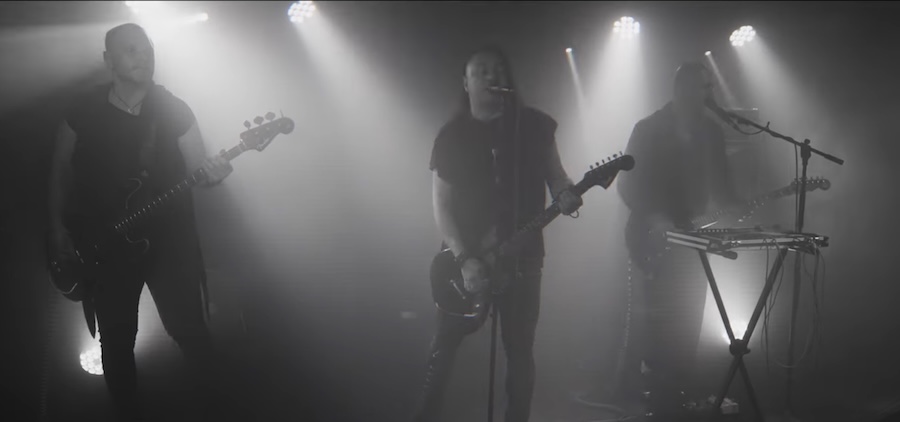
The live line‑up has remained unchanged for the past two years: Maciej Żolinas on bass guitar, and TomTylor on guitar, synths, and additional vocals. In the studio, I record all vocals and instruments myself. The exceptions are “End This|Summer” and “Exit|Wounds”, where Tom contributed to drum programming/sounds and added some great synth ideas, as well as “Freezing | Lights”, where besides some synths and programming, you can also hear his guitar riffs in the chorus.
It’s quite possible that for the upcoming shows Tom will be temporarily replaced by Doktor (known from the project HIGIENA), since Tom has certain commitments that unfortunately prevent him from taking part in the next UNDERTHESKIN concerts. The line‑up should return to its original form in spring 2026.
I’m curious about the position UNDERTHESKIN currently has in Poland. Can you rely on a strong base of fans who will always come to shows or order a CD/LP? Is there a part of Poland where, for example, you have significantly more supporters?
You know, it’s hard for me to say. I think in the bigger cities like Kraków, Warsaw, Poznań, and so on, we can always count on our fans and very solid attendance. How it looks in other places is harder to tell, since we usually play only 3-4 shows a year in Poland, and most often in those mentioned cities. According to streaming statistics, our biggest popularity is in the USA, Mexico, Germany, the UK, and of course Poland itself.
Our records usually sell very well because most of them are fairly hard to get. Very often the audience discovers us for the first time at concerts and then catches up at the merch stand. Bandcamp orders or other online platforms are always satisfying — we never have problems selling out the runs of CDs, cassettes, or vinyls. “Negative” has even received a few additional CD pressings, so we’re truly grateful to our fans, because they are always eager to support our work!
I receive an incredible amount of music from Poland, especially black metal releases. Are there any new faces in the gothic rock or dark wave scene as well? I get the impression that metal bands are overall much more ambitious—especially Polish ones… Do you agree with me?
You really can’t compare the Polish metal scene with the post‑punk or gothic one. It’s well known that Poland is built on metal, and those bands are usually at a very high performance level. As for our side of things, there’s been movement too – there are truly a lot of new bands. Young deathrock groups are doing particularly well, and there are quite a few of them. Many have a distinctly underground character, but more and more are appearing outside the country as well.
A very interesting double compilation called “Najmłodsza Generacja” (Zima Records) has come out, which gives a great overview of Poland’s young scene if you’d like to explore it further. As for the ambitions you mentioned – well, the nature of metal requires solid craftsmanship and production standards if you want to present yourself to a wider audience. It’s very hard to break through, and the competition is enormous – decent black metal releases come out daily, and good or even excellent ones appear several times a week, at least that’s my impression. It’s hard to keep up with it. 😉
What is the current status of your other project, WOLFPATH? Is a continuation of DEATHCAMP PROJECT still realistic?
Absolutely – I worked quite a lot on the DEATHCAMP PROJECT album during the Covid period, and we have around 10 tracks in an advanced stage. They still need some polishing, of course, but I’m convinced that sooner or later we’ll release them!
As for WOLFPATH – I basically already have another mini‑album in demo form, but it’s waiting for the right moment. With this project I feel relatively fulfilled, and I’m not sure if I’ll return to it (although knowing myself, I probably will!).
What awaits UNDERTHESKIN in the new year? What are your plans for the future?
Pretty standard, really – right now I have a lot of radio and written interviews connected with the album release. My calendar is quite packed with press commitments until February. In January we’re also playing two shows in Germany (Owls ’N’ Bats Festival) and the Czech Republic (Prague!), to which I warmly invite you. More gigs are already being arranged, but the main part of the concert promotion for N E V E R | R E T U R N is planned for the second half of the year. I hope autumn will be truly full of shows and that we’ll visit plenty of places we haven’t yet reached with UNDERTHESKIN!
There are also publishing plans — I’d really like to reissue the vinyl version of N E G A T I V E, because so far only one run of 300 copies was released (Oraculo Records), and it came with a shortened tracklist missing the song “Done” (a decision I don’t really understand, but it came from the label). So it definitely deserves a full and fair release!
In addition, there will be a reissue of the first album in CD format, and hopefully for the first time on vinyl as well. The new version will probably be enriched with two or three previously unreleased tracks from that period, which could shed a completely different light on the album. I also have recording plans, and I’ll admit that I’d like to come back with another album much sooner than in another six years! We will see!
Take care, thank you very much for the interview, and I’m already looking forward to next time…
I also want to thank you very much for the opportunity to talk and for the truly interesting and in‑depth questions! Take care, and see you soon!
ALL