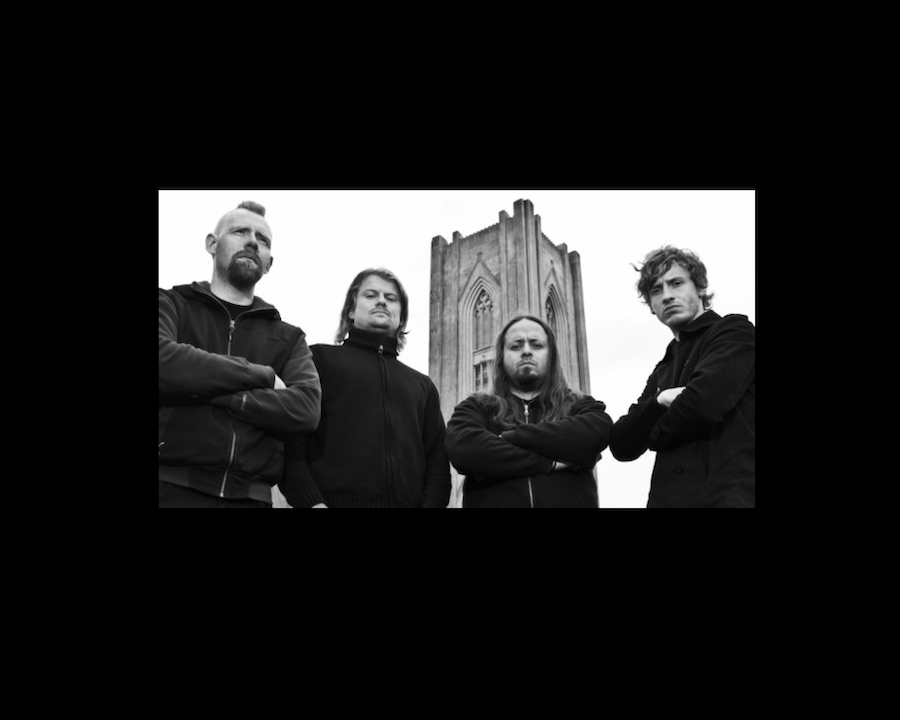
 Icelandic extreme metal pioneers SORORICIDE rank among the most influential names in their country’s early metal scene. Their 1991 debut, The Entity, remains a cornerstone of the Icelandic underground and one of the first truly extreme metal releases to emerge from the island. Despite periods of silence and a history far from linear, the band’s cult status has never wavered. Now, SORORICIDE are back—and for the first time ever, they’ll perform outside Iceland, bringing their ferocious sound to the Czech Republic at the Symbolic Air festival. I caught up with Gísli Sigmundsson, the band’s vocalist and bassist, to talk about the band’s history, the lasting impact of “The Entity”, the shifts in Iceland’s metal scene, and what’s next for the legendary group.
Gisli, thank you very much for the opportunity to conduct this interview. To begin with, could you describe what position SORORICIDE held on the scene in the early 1990s and how the public received the band? Would it be fair to say that you were the very first death metal band in Iceland?
Well, thank you for doing this interview with us. Yes, I think it’s fair to say that were were the first death metal band in Iceland, and as such we were probably seen as the scene leaders when it came to death metal, at least to begin with. We got surprising good reception, I guess the part of the public that was into metal was ready for something more extreme at that time.
Which bands influenced you the most? At that time, did you have a good overview of the direction metal music was taking? Was it possible for you to obtain recordings of the key death metal bands back then?
We were very lucky that we had a small independent record store who got a few copies of all the early death metal releases, so we managed to stay pretty much on top of what was happening. We listened to, and were influenced by, multiple different scenes, the Swedish scene, the UK scene and the US scenes, and if I had to pick bands from each scene that we were very influenced by I would probably pick ENTOMBED, CARCASS and MORBID ANGEL. But there were lots of bands that we listened to back then, and not neccessarily only death metal.
 Did you face misunderstanding from the public at the beginning of your musical journey? Or did no one in Iceland ever oppose such an extreme form of metal?
We never got any serious pushback to be honest. We got written about in the local music press and got quite positive reviews of our gigs for example. I’m sure there were plenty of people that didn’t care for our music, but then again I guess they didn’t care enough to give us a hard time either.
What were your first concerts like? Do you have any interesting experience you could share with us?
Stressful is the first word that comes to mind! They were fun though. We started out supporting friends that were playing in more rock oriented bands, and mostly played youth centers, which allowed us to build up a very strong following fairly quickly. The kids really seemed to like the extremity of what we were doing and quite a few would show up at pretty much every show we played. But we always said yes to playing if we possibly could, so we ended up playing strange gigs with all kinds of bands. I remember one gig, probably our forth gig or so, where we played a show on Iceland’s national holiday, the 17th of June. It was in a big sports hall, and we ended up playing right before one of the biggest pop bands in Iceland. The place was pretty much empty when we played, and still to this day I have now idea who though it would be a good idea to put us on that bill!
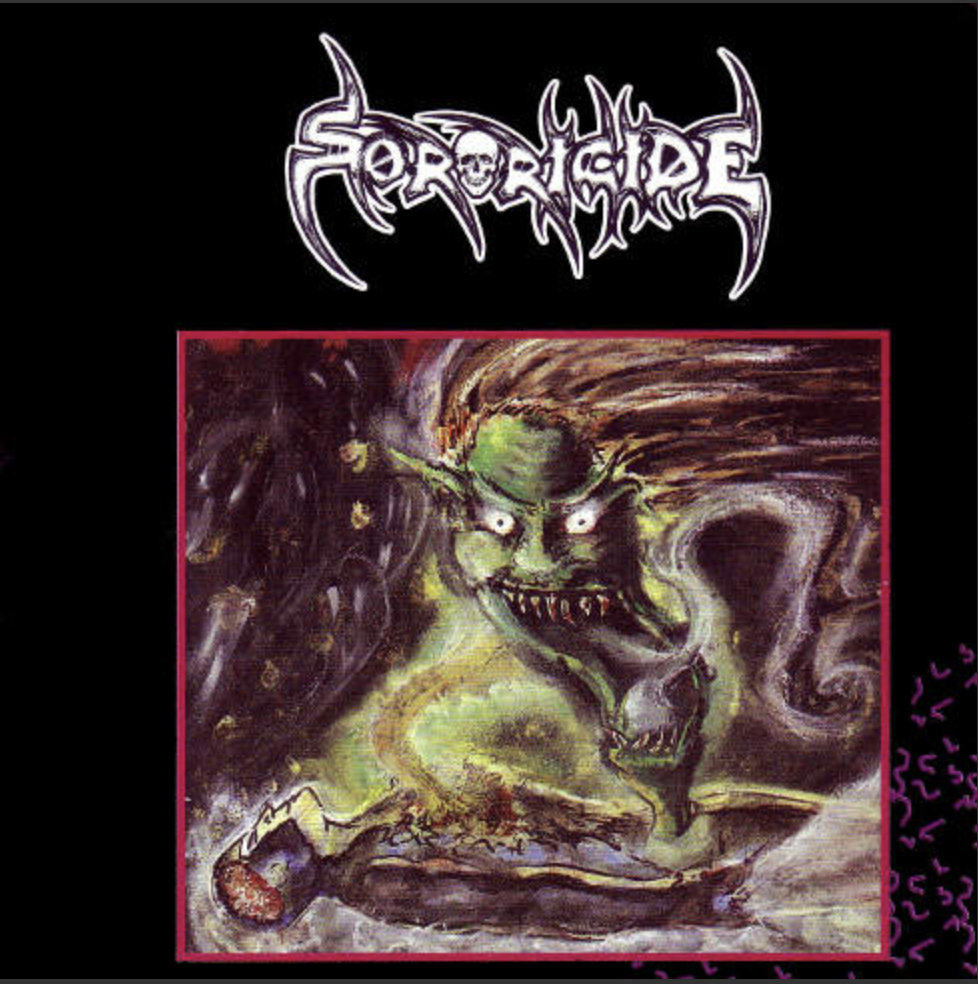
In 1991, SORORICIDE released their debut album “The Entity”. How important is this recording for Icelandic metal in general? At the beginning, were you focused only on the local scene, or was your goal mainly to get the recording abroad?
In hindsight it’s probably easier to see how important it was. I don’t think we realized it at the time, but this showed people that it was possible to release death metal albums in Iceland, at a time where we had very few metal releases in general, not even any in some years. It still took a few years for Iceland to get to the point that we would get regular metal releases, but this was at least by far the most extreme metal album that had been relesed by an Icelandic band at that point. We were hopefuly that getting the album out would bring us some opportunities abroad, but I don’t think we really saw it as a realistic goal to break out of Iceland at that point.
 What ambitions did you actually have with SORORICIDE? As time went on, did you receive any interesting offers for collaboration from abroad?
We were very interested in getting out of Iceland, and after the release of the compilation album “Apocalypse” in 1992, we took the three songs we had on that album and started to send them to labels as a demo. We did end up releasing the “Godlike” split CD with CHORUS OF RUIN on the Finnish label Rising Realm Records, but by the time that was finally released we had called it a day. There was some interest from some very small labels, but nothing ever came out of it.
Over time, Icelandic bands managed to establish themselves on a worldwide scale, but in the early 1990s everyone was just starting out. Did you know the other bands from the beginning, or were you not very aware of the other musicians at the time?
We were friends with most of the other bands in the scene back then, and still are to be honest. I don’t think any of the bands that were active back in the early 90s really got anywhere outside of Iceland, it wasn’t until SÓLSTAFIR started to gather interest from abroad that people started to really take notice of what was happening in Iceland, so back when we were active in the early 90s, it was a close scene, but also very closed.
I assume that the original release of the album “The Entity” is impossible to find today. Do you have any idea how many copies were sold? Are you planning any kind of reissue?
Yes, it’s pretty difficult to find an original copy by now, especially outside of Iceland. I know that there were 1000 copies made on vinyl and 1000 copies on CD, and I know that initially we sold around 1000 copies combined here in Iceland, which I think is pretty good considering everything, but I don’t know how it sold after that. There are stories of the label destoying old stock few years later, but I don’t know how much either. Regardless, it’s tricky to find these days. Regarding a rerelease, we’ve been asked about that so many times throughout the years, but the problem is that we don’t own the rights. The rights have gone through a few labels at least, when the labels have been sold, so it’s a bit complicated. It doesn’t help either that the master tapes are lost, but we’ve talked about perhaps doing some rerecordings. Let’s see what happens.
Fans of underground recordings hold your debut in very high regard. Is that still a great honor for you?
It is. For the longest time I struggled with that a bit, because I’ve always been unhappy with how the album came out, I know what we were capable of at the time and I don’t feel that the album comes near to capture what we could do as a band. But I’ve gradually accepted that it means different things for different people, and at the end of the day it’s not really about how I see the album. It’s really cool that people enjoy it and like it.
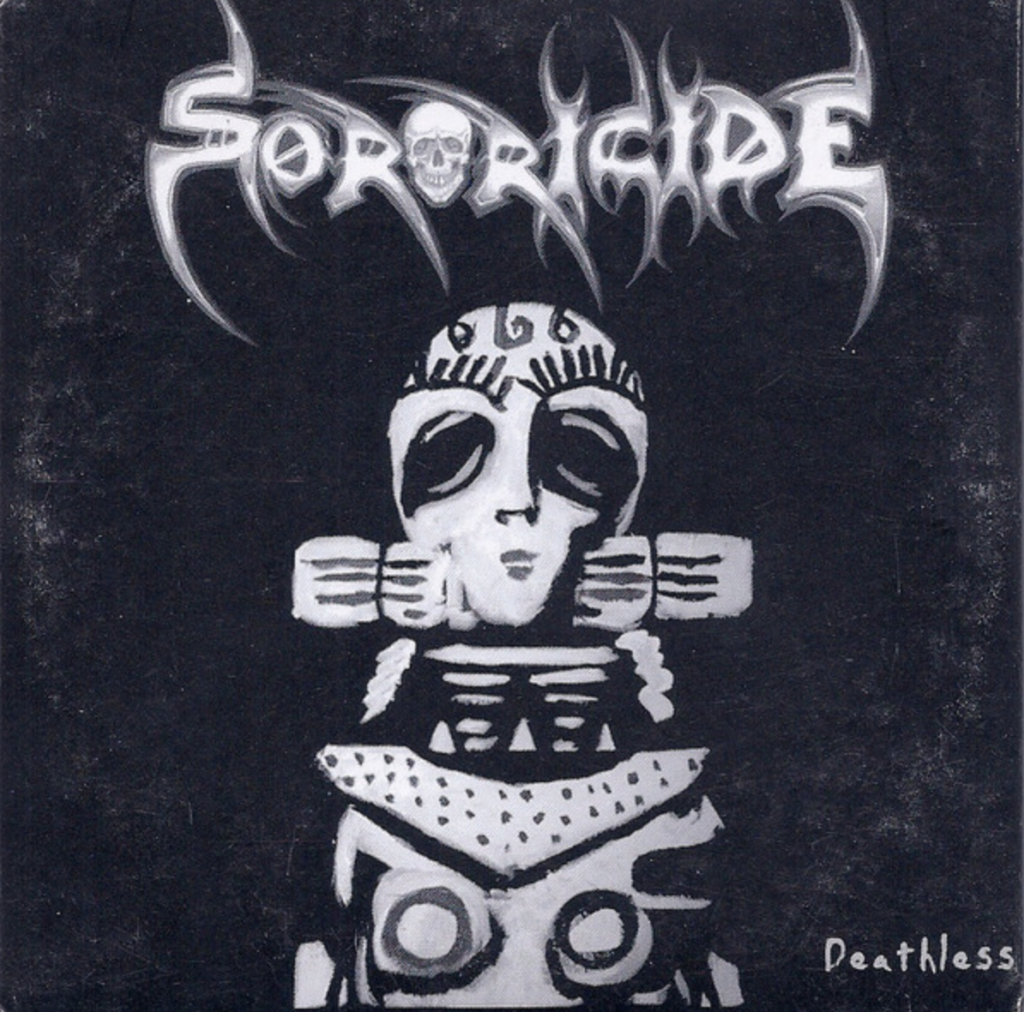 Looking back, how do you view the band’s subsequent breakup? What was the main reason for it? Was the end of SORORICIDE really inevitable?
Well, it’s my fault really. I was the one that quit, and I’ll fully admit that it was an overreaction to just being frustrated about where we were as a band. At the time we were spending a lot of time on the band with were little results, interest in death metal was going down, both in Iceland and all over the world really, and I guess we were just a little bit tired of each other. If I was in the same situation today I would have suggested that we take a bit of a break, a few months maybe, and then get back to it. But being young and impatient at the time, that wasn’t what happened. So it was probably not really inevitable.
In the following years, you revived SORORICIDE several times, but never for very long. Were all those comebacks intended to be only short-term?
I don’t think we every really had a plan.Something came up that we thought would be fun and we decided to do it. Then for one reason or another, we didn’t follow up on it properly, the interest wasn’t fully there from everyone, people were too busy with other projects, or we were just in different places in live as people. I don’t know really, but it just didn’t click.
However, for listeners it is great that SORORICIDE are active again now. In what way is the current situation different? Are you enjoying the interest from fans and the media? How are you experiencing and enjoying all of this today?
The irony is that this time we were not planning to become active again. The plan was to play a one final show at Sátan, a festival that me and Gaui, one of our guitar players, are part owners in, and that was supposed to be it. It was even advertised as our last show ever. And I was really happy with how it went and was just satisfied with it when I walked off the stage. But it was more fun this time, and I think this is what we all experienced, we were just enjoying ourselves and each other’s company more this time around, the interest from fans and media is of course great, but the main thing is that we’re enjoying ourselves being SORORICIDE again.
The big news for fans is that you will soon play your first show outside of Iceland. This will happen at the Czech Symbolic Air Festival. What interested you the most about this festival? Was there any key factor that convinced you to make the long trip to the Czech Republic?
To be honest we hadn’t really made any plans about continuing the band when we got the offer to play Symbolic. And it just sounded like a fun thing to do. I’ve been to shows and festivals multiple times in the Czech Republic and really like it, I enjoy spending time in the country and Prague is one of my favorite cities. So it just made sense, we were having fun, we got an interesting invite, the festival seems really cool and from what I understand focuses a lot on old school extreme metal and we seem to fit right in. So we just decided to go for it and stay active.
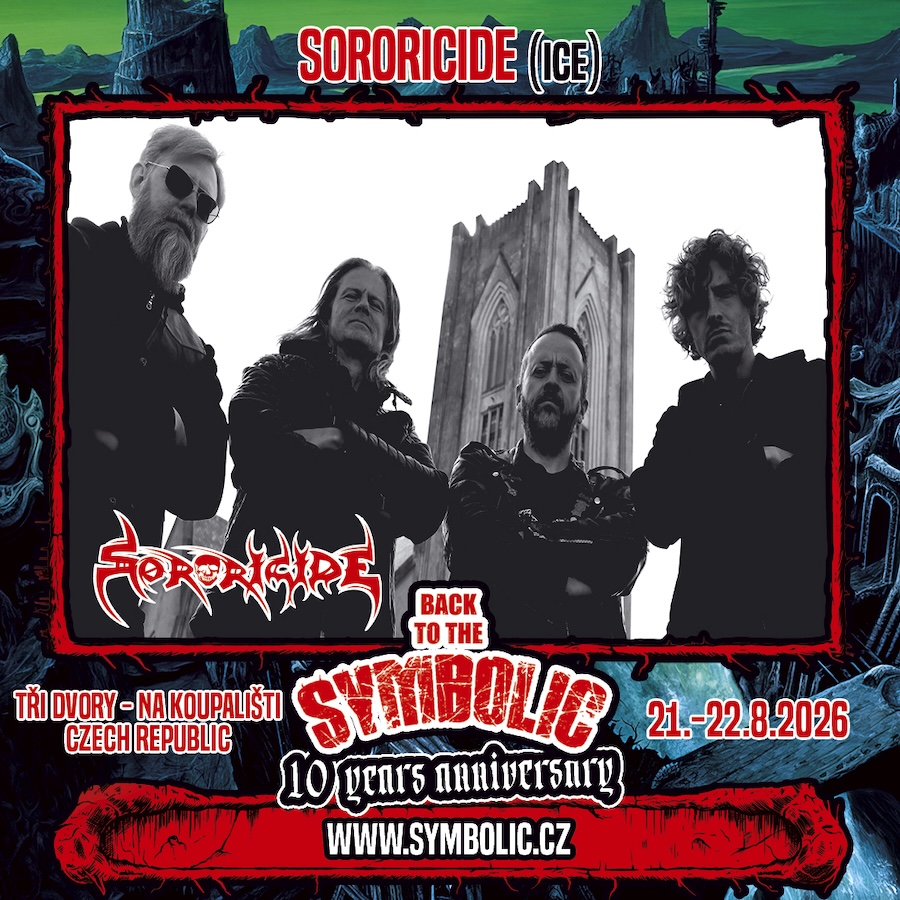
What does this joint trip to the Czech Republic mean to you personally? Is there something you are particularly looking forward to?
I’m always excited to return to the Czech Republic, but this time I’m particularly exited about playing for people that have never had the chance to see us, and hopefully there will be some people there excited to see us as well. I also really enjoy going to festivals abroad, and now I get the change to visit a festival that I haven’t been to before. So I’m expecting this to be a really fun trip.
Will it be possible for you to bring some merchandise with you to the Czech Republic? Many fans would surely appreciate that.
We’re definitely planning to bring some merch, we’re already talking about designs, so hopefully we can come up with something cool.
How would you evaluate the current state of the metal scene in Iceland? Which bands do you consider the most successful? Are young Icelanders interested in metal music?
I don’t think the Icelandic metal scene has ever been as strong as it is today. We have so many good bands, both more stablished and brand new bands, that I think the future of Icelandic metal is very bright. The biggest bands are definitely bands like SÓLSTAFIR and SKÁLMÖLD, but there are definitely lots of more extreme bands that are doing well abroad as well, especially MISÞYRMING for example. There also seems to be a resurgence in metal with the younger crowd, so we’re seeing more young people showing up at gigs and forming bands, which is a great sign for the health of the Icelandic metal scene.
On media platforms you have released some newer tracks, as well as the excellent single “Open Abyss” from last year. Can we already look forward to a new album? What plans do SORORICIDE currently have?
Currently we have no plans for any new material, we’ve talked about doing some rerecordings of our older material, as we want to make that more accessible for people, but I think we’ll just have to wait and see what happens. This time around we’re only doing this because we’re enjoying it, and just taking it one step at a time. So right now, no promises, but you never know.
Thank you very much for the interview, and I look forward to seeing you at Symbolic Fest.
Thank you as well, and we’re really looking forward to seeing all you crazy Czech metal heads this summer!
ALL