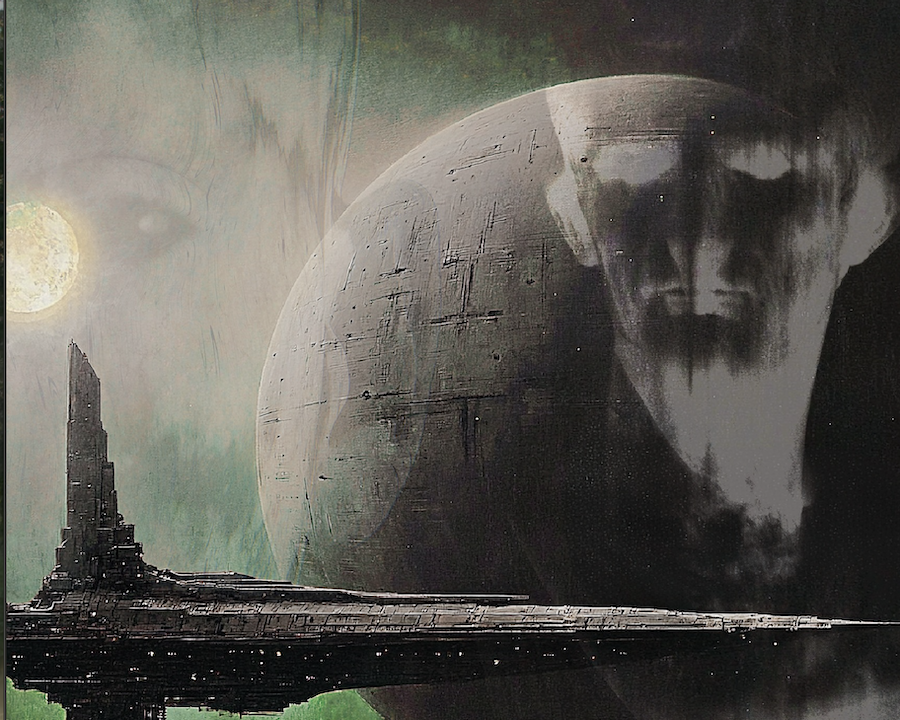
 Rafal Bowman, a talented Polish multi-instrumentalist, recently released his new album “Hypercosmic Paradox”, successfully continuing from his previous works and once again pushing the boundaries of musical galaxies. His style, described as progressive extreme metal, perfectly captures the ambitions and creative vision inspired by the fascinating depths of the universe. In our conversation, we delved not only into topics related to his latest release but also explored the mysterious corners of the cosmos and his perspective on the ever-evolving Polish metal scene. Prepare for an adventurous journey beyond the usual perception of music, where every note tells a story full of endless possibilities. This is CHAOS OVER COSMOS!
Rafal, could you start by introducing your musical journey, and especially the evolution your work has gone through? For example, what were your musical beginnings like?
I’m the founder, guitarist and main composer behind CHAOS OVER COSMOS, as well as a few earlier projects. CHAOS OVER COSMOS was born partly out of frustration with the difficulty of maintaining a stable band lineup and dealing with all kinds of musical and logistical differences between band members. At some point I realized that the time and energy I was spending on resolving those issues and negotiating compromises could simply be used to create music on my own terms. That approach turned out to be much closer to my personality and way of working. At that stage I even started to wonder whether I was suited to working with other people at all. After many years I still don’t have a definitive answer, haha. I definitely appreciate the independence of this solo approach.
My musical inspirations at the beginning were quite typical. I started as a teenager who was completely in love with bands like Iron Maiden and Judas Priest. I think those influences can still be heard on the debut album. With each following record, however, the music evolved more toward extreme and technical metal, because that kind of complexity gives me interesting creative stimuli and challenges as a musician. After the debut I especially moved toward very technical guitar playing. As a listener my taste has evolved as well, but probably not as dramatically as the music I actually create.
You compose the music for CHAOS OVER COSMOS by yourself, with only the vocalists changing. How do you choose or approach them? What system do you use to contact them? And how does such collaboration work in practice, considering they are primarily singers from abroad?
In practice, collaborating with vocalists remotely is not as complicated as it might seem. In CHAOS OVER COSMOS the vocals have a somewhat specific role – they function more like an additional instrument rather than the main one, which is the guitar. Because of that, vocalists usually don’t have an enormous amount of material to record, and they receive quite clear instructions from me regarding where exactly the vocals should appear in the songs.
I usually find vocalists online – for example by browsing vocal cover performances on YouTube. I contact them only at the very end of the album production process, when all the compositions are already finished and most of the instrumental parts are recorded. By that stage I already have a clear plan for which parts of a song should remain instrumental and which should include vocals, and I pass those guidelines to the singers so the final result matches the vision I have in mind.
When it comes to lyrics and the actual vocal interpretation, I give them a bit more creative freedom. I like the vocal stage of production to be relatively quick and efficient – it’s essentially the final touch before completing the album.
Was outer space your biggest inspiration from the very beginning? What attracted you the most to this theme?
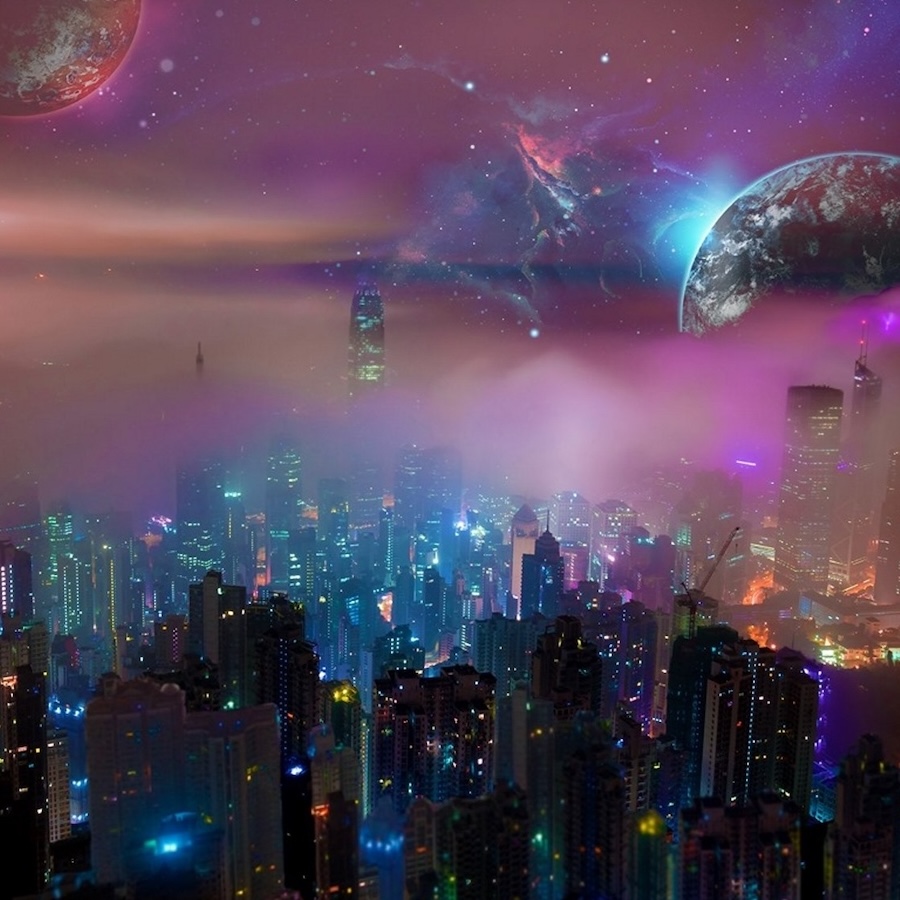
If we’re talking about inspirations outside of music itself, then yes – outer space has definitely been my biggest inspiration from the very beginning. What attracts me most is the sheer majesty of the cosmos. I mean both its scale in terms of size and time. The universe is so vast and so old that it’s almost impossible to truly comprehend. Another aspect is how mysterious it still is. We actually know very little about the universe, and there are many things we will never fully understand. At the same time, space is connected with some of the most fundamental questions humanity has always asked – and still hasn’t answered.
I’m also fascinated by the precision and harmony of cosmic processes. Looking at the universe gives you perspective. We naturally focus on what happens on Earth because that’s our everyday reality, but seeing things from a cosmic distance reminds us that we are not the center of everything. It teaches humility.
In your opinion, what is the greatest mystery of the universe?
That’s a great question! There are countless possibilities, but if I had to choose one, I would probably ask the question of what – if anything – existed before the Big Bang. That’s one of the fundamental questions that remains unresolved, and perhaps will never be resolved.
There are countless great musicians and bands in Poland. Are you in contact with any of them? Have you ever been tempted to become part of a regular band?
Yes, I’m in contact with some musicians and bands, both from the metal scene and outside of it. As for becoming part of a regular band again – because of the reasons I mentioned earlier, I concluded for a long time that it probably wasn’t the best path for me.
However, my perspective has slowly started to change. Sometimes people tell me they would like to see CHAOS OVER COSMOS performed live at least occasionally, and that idea has started to sound more appealing to me. As a full-time, constantly active band – probably not, because full studio albums remain the main focus and value of this project. But as something that might occasionally appear on stage in the future, that possibility definitely exists.
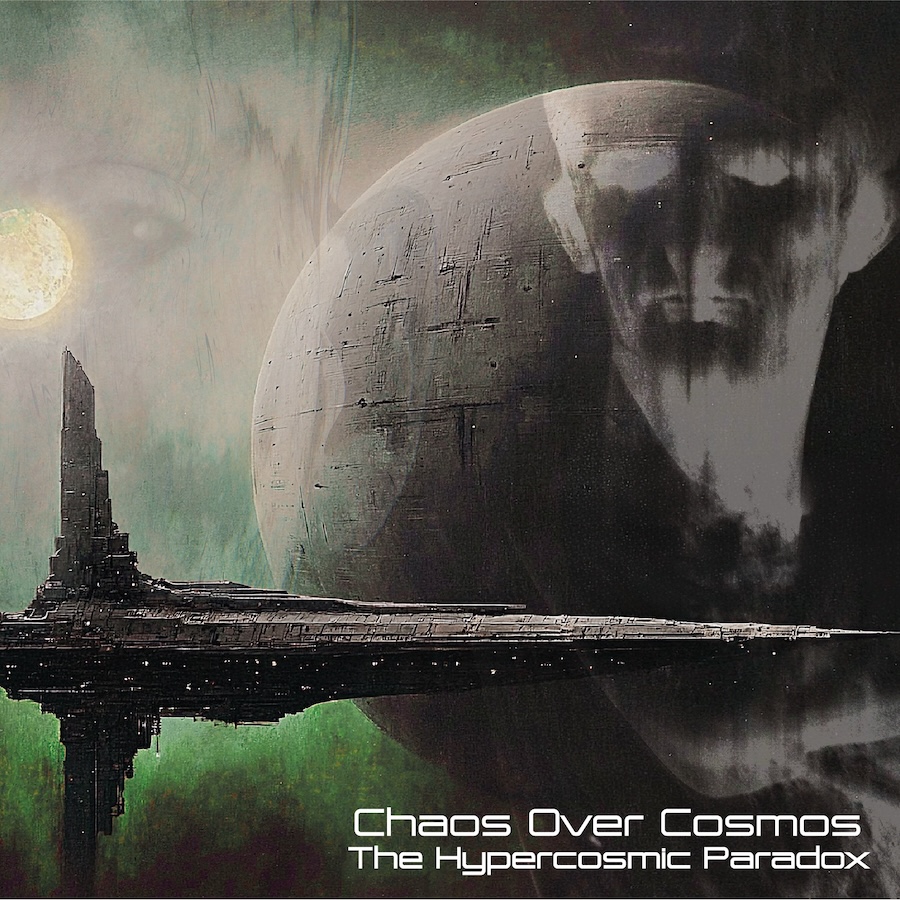
Please introduce your new album “The Hypercosmic Paradox” to the readers. Can it be compared in any way to your earlier work? In what aspects do you think you have progressed the most?
“The Hypercosmic Paradox” is, in my view, a continuation and further evolution of the technical and cosmic style that CHAOS OVER COSMOS has been exploring since the debut album. It’s a very intense record where I once again focus heavily on technical guitar playing and a cold, somewhat dehumanized sonic atmosphere.
What probably distinguishes this album the most from the previous ones is its brutality. I think it contains the highest concentration of aggressive and extreme elements that this project has ever had. At the same time, some of the biggest changes happened in terms of the overall sound production and the vocal approach – this time all the vocals on the album are performed using a full growling style.
The recording truly has a unique sound. You can really feel the presence of space in the music. Is the final sound the most important aspect you primarily focus on?
Thank you, I’m glad you perceive it that way! The sound was definitely important, but the music itself always came first. My main priority was to express my musical ideas through the compositions, so I spent a lot of time working on the guitar parts in particular, trying to make them as refined and precise as possible. For me, the composition and the guitar performance are the most important elements, the sound comes second – although it was still very important that it had a distinct character and wasn’t accidental.
I wanted the production to feel recognizable and specific. In my opinion, it’s better to create something that is very characteristic – even if some people strongly dislike it – than something neutral that doesn’t really stand out to anyone, either in a good or a bad way.
But ultimately, the music itself remains the most important thing. Even as a listener, I know albums whose production I’m not particularly fond of, yet I still enjoy them because the musical content is strong.
Many metal bands describe space as a primarily dark place. But your music isn’t horror-like; I would say it’s more abstract. Is that your intention?
Oh yes, definitely. I’m aware that many metal bands approach space in a more horror-oriented way, and a lot of them do it very well. But I’ve noticed that there are relatively few bands that focus more on ambiguity and abstraction rather than darkness itself.
Of course there are psychedelic bands that highlight that aspect, but within metal specifically it seems less common. What attracts me to the theme of space is also the immense complexity and scale of the universe. Darkness does appear in my music as well, but usually in smaller doses and more in the sense of an existential fear when confronted with something so vast and incomprehensible.
Is the album “The Hypercosmic Paradox” a concept album? Could you briefly introduce its story?
“The Hypercosmic Paradox” is not a concept album in the traditional sense of telling a single, continuous story through the lyrics. Musically, however, it does have some conceptual elements. Certain musical motifs or fragments appear again in different songs, sometimes in slightly hidden ways. That creates a kind of internal connection between the tracks. As for the lyrical side, it’s not a strict narrative concept. From what I understand, the lyrics written by Taha explore a kind of apocalyptic or cosmic vision rather than telling a single storyline.
The songs on the album are full of interesting variations and technical details. Are you currently satisfied with the artistic level you have reached?
I’m never fully satisfied, to be honest. But the album sounds very close to what I had originally planned, so I’m probably as satisfied as I can be. I managed to explore the aspects I wanted to focus on, especially in terms of technical ideas and arrangements. Many of the musical and structural solutions worked out the way I envisioned them. So overall, yes – the album achieved what I set out to do.
 You primarily release your recordings yourself. Is that intentional? Have any labels approached you about releasing your music?
Yes, recently I’ve been releasing my music independently. One of the previous albums was released through a label, and I did consider doing the same with this release as well. In the end, however, I decided that in this particular case it would be more convenient and practical to handle it myself.
I’m in contact with various labels and occasionally receive different offers. Some of them are quite ridiculous, while others are definitely worth considering. It’s possible that with a future release I might work with a label again – it really depends on the specific offer and also on how much time I have available to manage everything independently. For every album, however, I cooperate with different distros who handle the physical distribution of the music.
There are countless great bands in Poland that are recognized worldwide. Is it motivating for you to operate in such an environment? Which Polish bands do you respect and admire the most?
It’s true that the metal scene in Poland – and the music scene in general – is strong. But honestly, that fact alone doesn’t really motivate me in a direct way. I don’t usually think about music in terms of countries. For me it’s simply about whether the music is good or not. That said, there are of course many Polish bands that I respect and listen to. I’ll deliberately skip the most famous ones that everyone already knows and instead mention a band that not everyone might be familiar with: LOST SOUL. Their album “Immerse in Infinity” is absolutely fantastic.
What are your plans for the near future musically?
In the near future I plan to focus a bit more on another project that I’m working on together with some friends. The music is somewhat different from CHAOS OVER COSMOS. At the moment the project is on hold because we’re missing a drummer, but I hope that situation will change soon. As for CHAOS OVER COSMOS, we’ll see – but there’s a good chance that I’ll start working on new material sometime in the autumn.
Thank you very much for the interview. Take care, and I wish you all the best!
Thank you for the interest, Aleš, and for running RumZine. Zines like this are very valuable both for listeners and for musicians.I appreciate it now even more than ever, especially at a time when more and more content is being generated by AI rather than by people, which I personally find quite awful. All the best to you and to the readers of RumZine!
ALL